Practical information
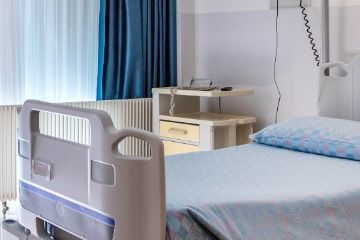
We want the patient's stay in the hospital to be as comfortable as possible; for this reason, EOC hospitals also place great emphasis on the aspect of reception services.


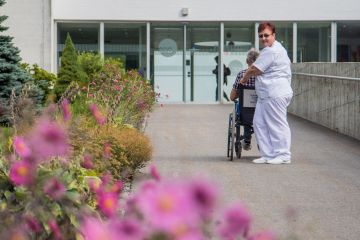
Ente Ospedaliero Cantonale has as its mission the enhancement of the public hospital network as a reference point for the population of Italian-speaking Switzerland.
Go to the section
Ente Ospedaliero Cantonale is a public multi-specialty hospital with modern infrastructure and state-of-the-art medical technology.
Go to the section
A multisite hospital. This is the founding characteristic of EOC and at the same time its strength, to be a diffuse and integrated hospital reality, with sites located throughout the canton.
Go to the section
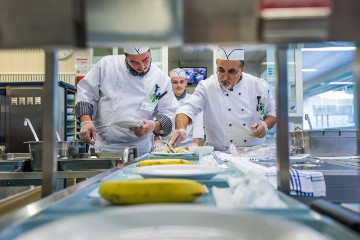
Useful information, training, and services for health professionals.
Go to the sectionThe prospect of hospitalization may require the right preparation for patients and their families. To best access our facilities, some useful information is available on these pages.
We want the patient's stay in the hospital to be as comfortable as possible; for this reason, EOC hospitals also place great emphasis on the aspect of reception services.
EOC employees do everything possible to ensure that the patient's stay in the hospital goes by without errors or complications. The organization steps in to support by creating a safer environment within which to act. However, the patient, his or her family members and companions can also contribute to increasing safety in the hospital. Safety is a team effort, and in this team the patient plays an active role.
Doubts, uncertainties, unclear aspects undermine safety of care. Direct communication between caregiver and patient helps to consolidate the relationship of trust that underlies the therapeutic relationship and increases safety of care: seemingly contradictory aspects, concerns, or new symptoms must be clarified. It is important for the patient to ask as many questions as he or she feels necessary: this is not confrontation, but collaboration to increase safety.
A hospital receives a large number of patients, sometimes even for rather short stays. In modern medicine it often happens that several complex activities have to be carried out quickly and sometimes simultaneously. In this context, despite the fact that caregivers pay close attention to this activity, it can happen that we get confused about objects, information and even people.
To avoid person confusion, EOC employees are asked to identify the patient by first name, last name and full date of birth:
If one addresses the patient using another name or in an unclear manner, it is important that the patient correct the confusion immediately. To support proper patient identification for inpatient stays and some types of outpatient stays, EOC hospitals have introduced the patient ID bracelet, which is placed by the attending staff upon entering the hospital following a specific procedure designed to ensure safety.
The bracelet should never be removed during the entire hospital stay. Should there be any problems with the bracelet, the patient should immediately contact the ward nurse.
EOC employees implement specific strategies to prevent falls in the hospital; the patient can contribute by implementing the following tips:
The hospital is characterized by the presence of multiple pathogenic microorganisms that if transmitted among patients can cause infections. Some of these infections are resistant to antibiotics and therefore pose a serious health risk to the most vulnerable patients and a major health care problem.
Proper hand hygiene is considered the most effective measure to reduce the risk of transmitting potentially dangerous microorganisms from patient to patient. Caregivers are called upon to apply specific rules about hand disinfection.
Patients, family members and visitors can also contribute to the fight against nosocomial infections by regularly disinfecting their hands while in the hospital. This gesture evidently is mandatory after being in the toilet.
Medications are a powerful tool at the disposal of caregivers, but they can also become dangerous if not treated systematically enough. In drug therapy, everything must be correct and precise. Therefore, it is important for the patient to inform the doctor and/or nurses about all the medications he or she takes at home. To facilitate this step and not to forget anything, it is advisable to make a list with the medicines taken at home and bring it with you to the hospital.
What should the list contain?
It may help to consult the publication Medicines in Safety from Swiss Patient Safety.
It is important to tell doctors and health care providers about the diseases you have and the treatments you are undergoing. It is also important to mention any allergies, whether to drugs or foods, disinfectants, patches, etc. Before undergoing examinations, treatments, or taking new medications, it is crucial that the patient understands why they are needed, what the expected effects and consequences are, how the examinations and treatments will be carried out, and who will be in charge of performing them.
In case these aspects are not clear, it is advisable to ask for further explanation. It may be helpful to repeat in your own words the information you receive from the doctors so that it is easier to understand.
If conflicting or contradictory information is received, further clarification should be sought.
Doubts or concerns should be addressed immediately.
After the hospitalization period, it is important that the patient is well informed to ensure the best possible outcome. Before leaving the hospital, the patient should receive the following information:
This information is critical to ensure proper management of the patient's care pathway once he leaves the hospital and to promote optimal recovery.
At all EOC locations you can find refreshment stations, means of entertainment and communication with the outside world, as well as other support services. In each section, all practical and useful information is available for patients and their loved ones.
The English version of this page was created with the aid of automatic translation tools and may contain errors and omissions.
The original version is the page in Italian.
Please take just a few moments to share your thoughts on the new website, www.eoc.ch. Your feedback is important to helping us improve the experience for everyone.
Fill out the survey now!