

Dermatology is the branch of medicine that studies the skin and its diseases, including skin adnexa (hair, hair, nails, sweat glands). Skin diseases can be inflammatory, infectious, cancerous, genetic, and caused by external factors.
Depending on the diagnosis, it may be helpful to examine the entire body and the functioning of internal organs.
Dermatology
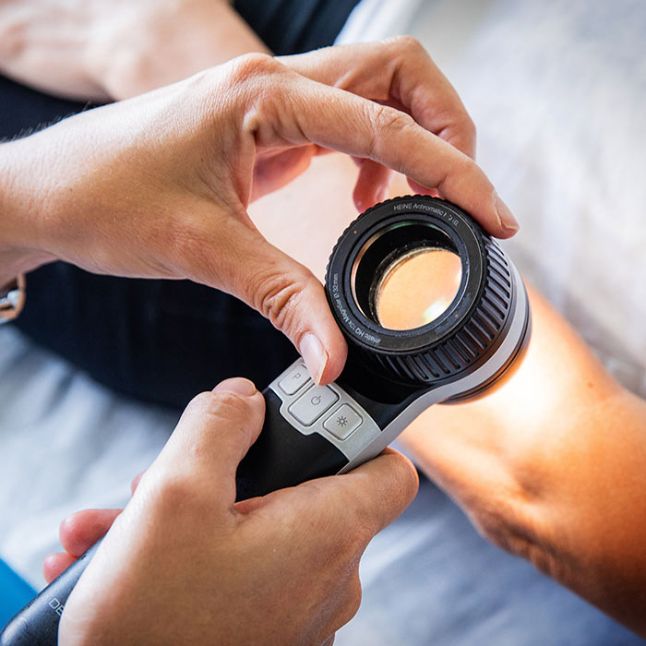
The skin constantly gives us signals, often not easy to decipher. Dermatologists have the important task of understanding what it is.
The specialty
What we treat
- Inflammatory diseases (dermatitis) of the skin (eczema, psoriasis, urticaria, lichen, others): these are quite frequent and usually have a benign course. Depending on the specific diagnosis and their extent they can also evolve and have a severe course. Some have an autoimmune origin (lupus, dermatomyositis, scleroderma, pemphigoid, others). In some cases they affect not only the skin but also internal organs, so it is even more important that they be recognized and treated properly. Clinically, the skin presents inflamed, reddened, with papules, pomphi, blisters, erosions and scarring. Sometimes also with changes in mucous membranes, nails, or hair loss.
- Contact dermatitis (irritative or allergic): inflammation of the skin caused by direct contact with irritants or allergens.
- Skininfections: the skin can be infected by bacteria, viruses, fungi, and even parasites. Treatment should always be specific and cautiously evaluated against the harmful agent. There are also skin infestations (demodicosis, scabies, lice) and skin reactions after the sting or bite of various insects or arthropods.
- Venereology: sexually transmitted infectious diseases that can result in genital and/or extragenital lesions and symptoms (e.g., herpes, condylomata, molluscum contagiosum, syphilis, gonorrhea, chlamydia, candidiasis).
- Skin tumors: may be benign (more frequent) or malignant. Faced with a new skin lesion/tumor that changes and/or looks different from the rest or shows progression, consult the dermatologist. In the presence of complex or advanced skin tumors, multidisciplinary care is important.
- Disorders of healing: in chronic wounds, the transition of the different stages of healing does not take place in a physiological way and as a result a wound (ulcer) is formed that does not heal. The causes may be different: diabetes mellitus, venous/arterial/mixed insufficiency, dermatological diseases, external factors (trauma), other.
- Acne: is a complex problem of the pilosebaceous glands caused by several factors. Clinically it presents with comedones, papules, pustules, nodules and scarring on the face and torso. It typically occurs in adolescence but there are different forms that arise in childhood or in the adult.
- Disorders of the skin adnexa: disorders of the nails and hair can be isolated or be associated with a more complex problem, either of the skin or internal organs or be associated with taking medications (examples nail diseases: mycosis, psoriasis, lichen plano, tumors; examples hair diseases: androgenetic alopecia, alopecia areata, scarring alopecia, hirsutism, acne, rosacea, hydrosadenitis suppurativa, folliculitis, follicular cysts, tumors, hyperhidrosis).
- Itching: Itching is a very common symptom that can cause significant discomfort to great distress, and is one of the most frequent reasons for a dermatologic consultation. Itching can be a symptom of a primary skin condition, or an internal disease. Frequent causes of itching are skin inflammation (eczema, psoriasis, urticaria, pemphigoid), chronic kidney problems, and scabies.
- Genetic diseases: the skin is often involved in syndromes and/or diseases caused by genetic alterations (genodermatosis) or as a secondary manifestation associated with other syndromes. There is close collaboration with the Servizio di Genetica medica EOC and Dermatology.
Diagnosis and treatment
The specialist who observes the skin recognizes many diseases after a thorough examination of the problem. A complete skin examination includes examination of the scalp, nails, and mucous membranes. If a diagnosis cannot be made by observation alone, other examinations can be integrated to better understand the problem. When possible, treatment is chosen that is as specific as possible for the disease and the patient.
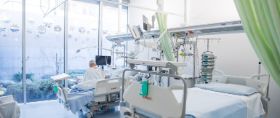
When skin inflammation is very extensive or when healing of skin problems is particularly slow, admission to the dermatology department of the Ospedale Regionale di Bellinzona, San Giovanniis recommended . An expert team of dermatologists and specialized nurses from the Servizio di Dermatologia EOC ensures intensive and specialized treatment every day. Another major advantage of inpatient hospitalization is also the possibility of in-depth diagnostic investigation in cases that are difficult to manage on an outpatient basis or to quickly adjust therapies to changes in the disease. Hospitalization is also often useful for surgical treatment of some skin cancers.
Diagnosis
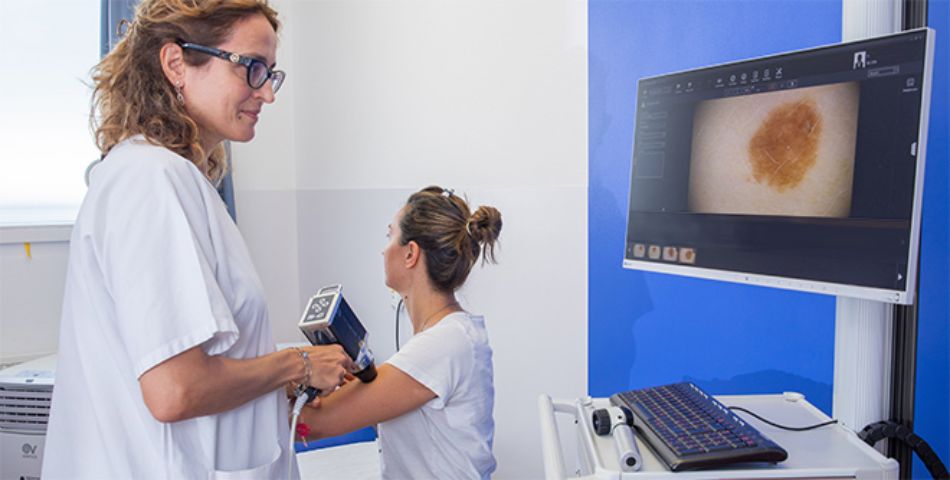
- Dermatoscopy: the use of dermatoscopy (10x magnification lens) for skin observation increases diagnostic accuracy. For patients with multiple moles and risk factors for developing melanoma, the digital dermoscopy technique (Photofinder System) is used to map moles and monitor atypical lesions.
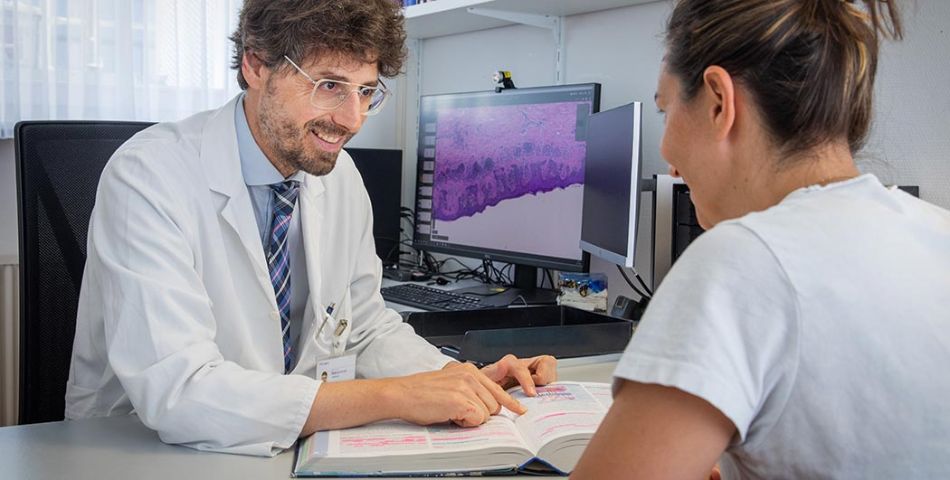
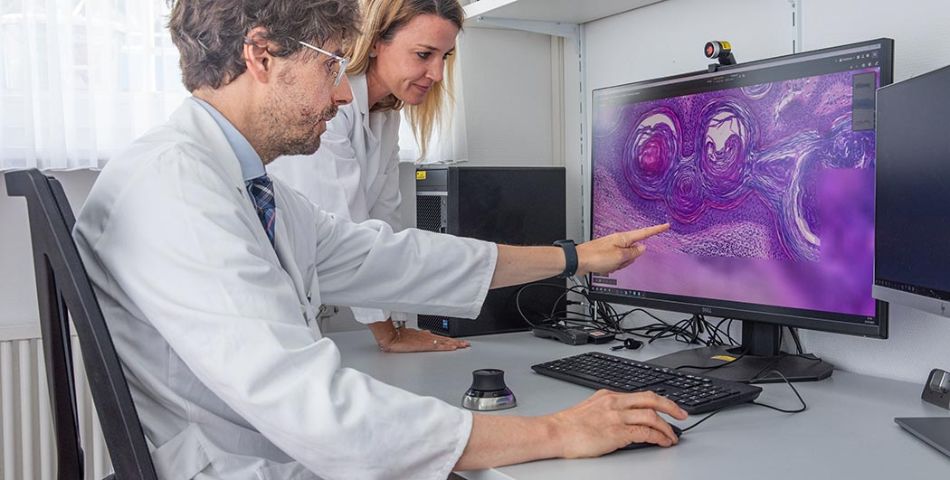
- Skin biopsy: removal of a small fragment of skin under local anesthesia and microscopic analysis by a dermatopathologist/pathologist.
- Dermatopathology: this EOC service provided by the Clinica di Patologia is intended to promote and enhance specialist expertise in the field of dermatology and pathology in Ticino. All difficult cases are discussed by multiple specialists, considering clinical information to best concretize the clinical-pathological correlation in the diagnostic evaluation. Complex cases are also discussed in the clinical-pathological colloquia in EOC dermatology at the Ospedale Regionale in Bellinzona or in specific weekly interdisciplinary meetings in the EOC, for example, in hemato-oncology for cutaneous lymphomas and in dermatology-surgery for complex skin tumors.
- Microbiological analysis (scrapings, smears, swabs, cultures): if a fungal infection is suspected, material is taken by scraping the skin, and then the material taken is examined directly under a microscope. The material may also be swabbed and then sent to the laboratory for analysis.
- Allergy tests: these are very specific tests (skin or blood) that are performed when an allergic reaction is suspected.
Treatments
- Topical medications: many skin diseases can be treated with local cures (creams, ointments, lotions, pastes, gels, patches, etc.). These treatments have the advantage of having few side effects and directly treating the affected area.
- Systemicdrugs: systemic cortisone (oral, intramuscular or intravenous), immunosuppressive drugs, biologic drugs. The latter are increasingly used in dermatology for inflammatory diseases with severe presentation (psoriasis, eczema, urticaria) and in certain cancers (melanoma).
- Cryotherapy: the superficial, controlled freezing of the skin using liquid nitrogen. Possible treatments for: warts, condylomata, molluscum contagiosum, benign skin tumors (seborrheic keratoses), precancerous and certain skin cancers.
- Photodynamic therapy (PDT): exploits the interaction between light and a topical product applied to the skin a few hours beforehand; the skin is exposed to medical LED light that activates the drug that acts on the target cells; used with excellent results in treating, e.g., acne, rosacea, extensive actinic keratoses.
- Laser: there are multiple skin conditions that can be cured or improved by Laser treatment; E.g., vascular malformations (nevus flammeus), post-acne or post-operative scarring, erythrosis in patients with rosacea, hyperpigmentation. In addition, various types of aesthetic treatments can be performed such as hair removal, removal of seborrheic warts, capillary angiomas, or unwanted tattoos.
- Phototherapy: ultraviolet allows for an anti-inflammatory effect while ensuring less use of other drugs; it is mainly used to treat psoriasis, vitiligo, eczema.
- Dermatologic surgery: surgical excision of skin and subcutaneous lesions such as malignant and, if necessary, benign tumors. In selected cases, The Servizio di Dermatologia EOC uses the technique of Mohs micrographic surgery: a surgical technique reserved for certain types of skin tumors (basal cell carcinoma and some cases of spinocellular carcinoma), aimed at ensuring complete excision of the neoplasm by minimizing the size of the surgical removal and thus sparing the surrounding healthy skin as much as possible. With this technique, excision of the lesion is followed by immediate histopathologic examination, with analysis of the entire margins; if margins are involved, targeted surgical resection is performed, and once "healthy" margins are obtained, final wound closure is performed.
- Multidisciplinary care for complex skin tumors: for patients with complex or advanced skin tumors, the Servizio di Dermatologia EOC, in collaboration with other disciplines, has created the EOC Complex Cutaneous Tumor Center that facilitates multidisciplinary discussion and care.
- Multidisciplinary evaluation for targeted treatments of healing disorders: in chronic wounds, the transition of the different stages of healing does not occur physiologically and as a result a wound (ulcer) forms that does not heal. The causes may be different: diabetes mellitus, venous/arterial/mixed insufficiency, dermatological diseases, external factors (trauma), other. In these cases, a multidisciplinary evaluation is necessary. The Wound Care Outpatient Clinic is staffed by specialized physicians and nurses who provide comprehensive care of the scarring issue, after identifying the cause. Together they choose for the patient the most appropriate treatment for the wound, so as to promote healing and prevent complications and recurrence.
Patient services
Dedicated services
Insights
National and international collaborations
Specialists in the Servizio di Dermatologia EOC engage in various national and international collaborations, with even humanitarian projects such as supporting the development of dermatology and dermatopathology in Sub-Saharan Africa. The chief physician has worked as a volunteer dermatologist in Tanzania and has been particularly active in training physicians from less fortunate professional backgrounds (China, Egypt, Ethiopia, Kenya, Russia, Rwanda, Saudi Arabia, Tanzania, Turkey, Uzbekistan) over the past 15 years.

Research and teaching
The Servizio di Dermatologia EOC participates in undergraduate teaching for medical students at the Medical Master School of the Università della Svizzera Italiana (USI).
PD Dr. med. H. Beltraminelli and PD Dr. med. C. Mangas are also active in research in dermatology, dermato-oncology and dermatopathology and are engaged as supervisors of master's or doctoral (dissertation) work of USI students.

Contacts
Ambulatorio di Dermatologia
Ospedale Regionale di Mendrisio, Beata Vergine
-
Orari di risposta al telefono
Monday : 08:30 - 12:00 / 13:30 - 16:30
Tuesday : 08:30 - 12:00 / 13:30 - 16:30
Wednesday : 08:30 - 12:00 / 13:30 - 16:30
Thursday : 08:30 - 12:00 / 13:30 - 16:30
Friday : 08:30 - 12:00 / 13:30 - 16:30
-
Chiusura dell’ambulatorio
Saturday
Sunday
Ambulatorio di Dermatologia
Ospedale Regionale di Bellinzona, San Giovanni
-
Orari di risposta al telefono
Monday : 08:30 - 11:30 / 13:30 - 16:00
Tuesday : 08:30 - 11:30 / 13:30 - 16:00
Wednesday : 08:30 - 11:30 / 13:30 - 16:00
Thursday : 08:30 - 11:30 / 13:30 - 16:00
Friday : 08:30 - 11:30 / 13:30 - 16:00
-
Chiusura dell’ambulatorio
Saturday
Sunday
Ambulatorio di Dermatologia
Ospedale Regionale di Lugano, Civico
Per i nuovi pazienti necessitiamo della delega da parte del medico curante/medico specialista.
-
Orari di risposta al telefono
Tuesday : 09:00 - 11:00 / 13:00 - 15:00
Wednesday : 09:00 - 11:00 / 13:00 - 15:00
Thursday : 09:00 - 11:00 / 13:00 - 15:00
Friday : 09:00 - 11:00 / 13:00 - 15:00
-
Chiusura dell’ambulatorio
Monday
Saturday
Sunday
Ambulatorio di Dermatologia
Ospedale Regionale di Locarno, La Carità
-
Orari di risposta al telefono
Monday : 08:30 - 11:30 / 13:30 - 16:00
Tuesday : 08:30 - 11:30 / 13:30 - 16:00
Wednesday : 08:30 - 11:30 / 13:30 - 16:00
Thursday : 08:30 - 11:30 / 13:30 - 16:00
Friday : 08:30 - 11:30 / 13:30 - 16:00
-
Chiusura dell’ambulatorio
Saturday
Sunday
Related News



Events
Currently there are no scheduled events or trainings, discover past events.
Locations
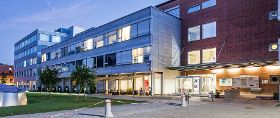
The Servizio di Dermatologia EOC provides specialized outpatient and inpatient services and is available at the Ospedali Regionali in Lugano, Mendrisio and Bellinzona.
The English version of this page was created with the aid of automatic translation tools and may contain errors and omissions.
The original version is the page in Italian.
