Sleep medicine

Sleep medicine Sleep medicine

Better sleep for better living: a goal that can be cut with sleep medicine.

Sleep medicine

The specialty

Sleep medicine is a branch of medicine that deals with the diagnosis and treatment in patients of all ages who manifest difficulty initiating or maintaining sleep, excessive daytime sleepiness, respiratory disturbances in sleep, restless leg syndrome, abnormal behavior during sleep, or other sleep-related disorders.
What we treat

Pathologies

  • Insomnia: persistent alteration in sleep duration and quality, difficulty falling asleep, multiple nighttime awakenings or too early an awakening in the morning.
  • Disuse from pharmacological abuse of sedative/hypnotic drugs.
  • Respiratory disorders and snoring in sleep: abnormalities of breathing during sleep (e.g., obstructive sleep apnea OSA).
  • Restless legs syndrome: syndrome characterized by nervousness/irritability in the lower limbs with a need to move the legs that usually appears in the evening and at night and can make it difficult to fall asleep.
  • Movement disorders in sleep: abnormal appearance of movements that disturb sleep and its onset (e.g., involuntary periodic movements, morpheic epilepsy).
  • Circadian rhythm disturbances: alterations in the rhythmicity with which sleep-wake phases alternate; the subject's propensity to fall asleep does not correspond to the period of night hours (e.g., jet-lag, work-related disturbances, postponement or anticipation of the sleep phase, blindness rhythm disturbance).
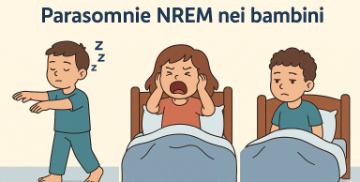
  • Parasonnias: unusual behaviors that occur just before falling asleep, during sleep, or upon awakening, without full awareness on the part of the subject (e.g., sleepwalking, Nocturnal Pavor, behavioral disturbance in REM sleep).
  • Narcolepsy and other forms of Central Hypersomnia: Excessive daytime sleepiness, with sleep strokes or need for more sleep, without nighttime sleep being compromised by another disorder.
  • Sleep disorders in children: all the disorders listed above may occur in pediatric age with specific characteristics.

Diagnosis and treatment

Diagnosis

After the initial anamnestic collection in the context of an initial visit lasting an average of one hour, the diagnosis of sleep disorder is defined on the basis of the data collected following the performance of one or more instrumental examinations, including some of the main ones below.

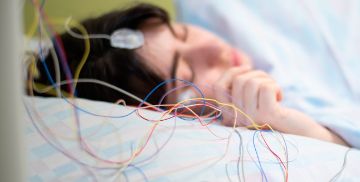
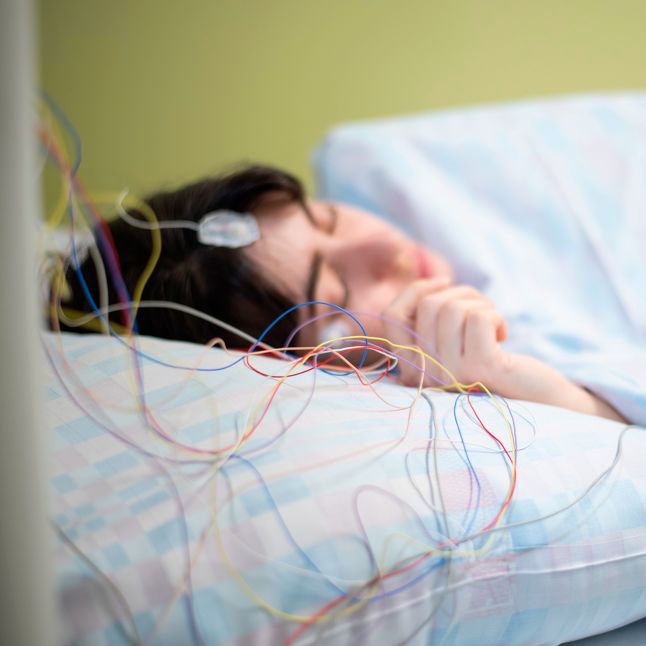
  • Video Polysomnography Steady-state (VPSG): a method used in conjunction with video recording to study electrical brain activity that allows identification of sleep stages and body parameters, such as electrocardiogram, limb movements, breathing, oxygen saturation and position. The patient sleeps at the sleep laboratory in a single room equipped with a bathroom for personal use.
  • Ambulatory/domiciliary polysomnography (PSG): a method used to search for sleep disorders that do not need to be diagnosed by testing the patient during recording and with video recording; several electrodes, all surface, are placed on the head and others on the body. The patient sleeps at home.
  • Polygraphy: a method indicated in the second-level diagnosis of respiratory disorders in sleep, whether obstructive or central in nature; it is a less precise examination than polysomnography and is reserved for patients with strong clinical suspicion of sleep apnea. The method does not allow the study of sleep and its phases, and the patient sleeps at home.
  • Napping (NAP): similar to VPSG, it is used in children younger than one year of age, looking for a respiratory or other sleep disorder such as, for example, epilepsy; the young patient is studied at the sleep laboratory.
  • Multiple Sleep Latency Test (MSLT): a test mainly used in the diagnosis of central hypersomnias, it is used to quantify the severity of daytime sleepiness by measuring how fast/easy the patient falls asleep during 5 scheduled daytime naps every 2 hours.
  • Maintenance of Wakefulness Test (MWT): test used to check ability to stay awake in monotonous situations; 4 recordings lasting 40' each, at 2-hour intervals; method indicated in patients with excessive daytime sleepiness, to measure response to treatment, and for safe vehicle driving.
  • Capnography: used to assess the level of circulating carbon dioxide, i.e., the patient's ability to eliminate carbon dioxide with proper breathing; generally indicated in the presence of muscle disease, in obese patients or in patients with severe obstructive apnea.
  • Salivary melatonin assay: salivary sampling at specific times for the purpose of identifying the time of onset of individual production of melatonin (sleep-inducing neurotransmitter); useful method for establishing a person's chronotype and planning the use of light therapy or melatonin administration in circadian rhythm disorders and, thus, regularizing the sleep-wake cycle. The test is performed by the patient at home after detailed instructions.
  • Attigraphy: this is a watch-shaped accelerometer, worn on the wrist, used to study circadian rhythm (sleep-wake) for periods of at least one week at the patient's home.
  • Manual titration of ventilation during sleep: a method of adjustment and titration of noninvasive ventilatory therapy during sleep during video-polysomnographic examination in the sleep laboratory. Reserved for complex patients, patients who have not tolerated CPAP (Continuous Positive Airway Pressure) or patients who, despite using CPAP correctly, remain symptomatic due to daytime sleepiness or other symptoms or do not fully correct the respiratory disturbance.
  • CSFOrexin assay: test indicated in the diagnosis of narcolepsy; measures Orexin in CSF by lumbar puncture.

Treatments

Treatment approaches differ depending on the diagnosis. Treatment may include:

  • Pharmacological therapy: such as in the case of restless legs syndrome, hypersomnia/narcolepsy, insomnia or other disorders.
  • Ventilatory treatment: such as in the case of apnea, especially in severe patients, use of overnight CPAP, a treatment to counter airway collapse through a system that delivers pressurized air through a mask (CPAP).
  • Positional therapy: such as Night shift is an electronic device placed in the back of the neck that vibrates every time the patient moves to a supine position; this helps him or her sleep in positions that discourage the onset of snoring and sleep apnea. Night Balance, a similar therapeutic device but worn at the thoracic level.
  • Dental therapy: with oro-mandibular propeller, which consists of a removable dental appliance to be worn only at night, which slightly advances the jaw, allowing treatment of snoring and obstructive apnea in non-serious forms if anatomical conditions permit. Bite therapy in bruxism (teeth grinding in sleep); rapid palate expander therapy in children with obstructive sleep apnea, in addition to or instead of surgical therapy.
  • Surgical therapy of apnea in sleep: adenotonsillectomy, especially in children if the problem is related to airway obstruction from adenotonsillar hypertrophy; soft parts surgery; maxillofacial surgery; hypoglossal nerve stimulator implantation (both internal and external).
  • Cognitive-behavioral therapy for insomnia: nonpharmacological therapy consisting of a series of group or individual meetings in which the patient with insomnia is educated about the main aspects of sleep and guided to modify their behaviors to improve sleep.
  • Light therapy: home therapy with bright light, indicated for circadian rhythm and mood disorders; the therapy uses exposure to light in a planned manner to resynchronize the internal biological clock with the 24-hour rhythm of the environment.
  • Sedated drug abuse de -addiction: therapy indicated in patients with addiction to and abuse of hypnoinducing drugs; in severe cases, the process of drug de-addiction takes place under inpatient care.

Patient services

Dedicated services

Cognitive behavioral therapy for insomnia

Nonpharmacological therapy consisting of a course of 7 group or individual meetings in which the patient with insomnia is guided to modify his or her behaviors to improve sleep. The course is reimbursed by health insurance and is conducted in both Lugano and Bellinzona.

Sleep Check

Sleep chek-up, with screening for major sleep disorders, definition of one's chronotype, and useful advice for improving one's sleep-wake cycle. Provides for instrumental tests and two personal interviews.

Corporate Chronobiological Counseling (CCA)

Consultation reserved for companies with night shift workers, with opportunities for: training, review of shift schedules with chronobiological criteria, individual visits for suitability for night work, company screening on sleep and vigilance disorders.

Insights

Useful information: VPSG stationary

For the sedentary VPSG, the patient should bring overnight necessities for daytime vigilance tests, comfortable clothing and always a two-piece underwear. The examinations are not painful.

Center certified by the SSSSC

The Servizio di Medicina del Sonno is one of 30 centers certified by the Swiss Society for Sleep Research, Sleep Medicine and Chronobiology (SSSSC).

Certified center for restless legs syndrome

The Sleep Medicine Service is one of two internationally certified European centers of excellence on restless legs syndrome research and management.

Search

Ongoing research studies and clinical trials:

  • GluREST study: clinical trial to evaluate the efficacy of a new drug for restless legs syndrome. Please refer to the information in the informed consent for details.
  • Sphinx study: nonpharmacological observational study of narcolepsy to collect long-term data useful for better management of the disease.
  • HD-DOA study: nonpharmacological observational study on sleepwalking, with the aim of understanding the causes of the disorder.
  • Takeda study: pharmacological clinical trial in patients with narcolepsy to test the efficacy of a new orexin agonist drug. Please refer to the information in the informed consent for details.
  • SIESTA study: non-pharmacological observational study in patients with prostate cancer to test the impact of hormone therapy on sleep. Please refer to the information in the informed consent for details.
  • SIESTA 2 study: non-pharmacological observational study in patients with breast cancer, in order to verify the impact of hormone therapy on sleep. Please refer to the information in the informed consent for details.

Doctors

Contact

Istituto di Neuroscienze Cliniche della Svizzera Italiana

Ambulatorio di Medicina del sonno

Ospedale Regionale di Bellinzona, San Giovanni

  • Orari di risposta al telefono
    Monday : 09:00 - 11:00 / 14:00 - 16:00
    Tuesday : 09:00 - 11:00 / 14:00 - 16:00
    Wednesday : 09:00 - 11:00 / 14:00 - 16:00
    Thursday : 09:00 - 11:00 / 14:00 - 16:00
    Friday : 09:00 - 11:00 / 14:00 - 16:00

  • Chiusura dell’ambulatorio
    Monday
    Tuesday
    Friday morning
    Saturday
    Sunday

Istituto di Neuroscienze Cliniche della Svizzera Italiana

Ambulatorio di Medicina del sonno

Ospedale Regionale di Lugano, Civico

  • Orari di risposta al telefono
    Monday : 09:00 - 11:00 / 14:00 - 16:00
    Tuesday : 09:00 - 11:00 / 14:00 - 16:00
    Wednesday : 09:00 - 11:00 / 14:00 - 16:00
    Thursday : 09:00 - 11:00 / 14:00 - 16:00
    Friday : 09:00 - 11:00 / 14:00 - 16:00

  • Chiusura dell’ambulatorio
    Saturday
    Sunday

Locations

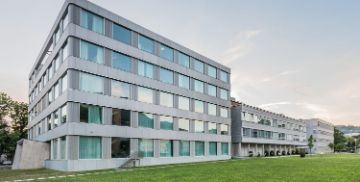
The Sleep Medicine Service is part of the Institute of Clinical Neuroscience of Southern Switzerland. Single management for all EOC hospitals can be reached at the Bellinzona and Lugano sites.

The English version of this page was created with the aid of automatic translation tools and may contain errors and omissions.
The original version is the page in Italian.