
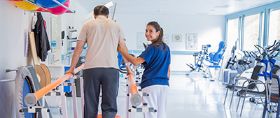

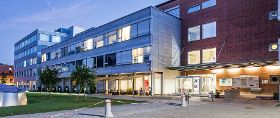
Sports medicine focuses on the prevention, diagnosis, and treatment of conditions caused by physical activity and/or that affect a person’s ability to engage in physical activity, as well as on athletes’ performance. Within the EOC, the Centro Cantonale di Medicina dello Sport EOC, based in Tenero, serves as the cantonal hub for this specialty and is led by Dr. Patrick Siragusa. The specialty is part of the EOC Sport network, the network of physicians and facilities within the Ente Ospedaliero Cantonale dedicated to the prevention, diagnosis, treatment, and rehabilitation of musculoskeletal conditions and orthopedic and sports injuries.
Sports medicine


Medical disciplines serving athletes or those who wish to approach the practice of physical activity not necessarily sports.
The specialty
What we deal with
- Diagnosis and treatment of sports-related traumaticor overload injuries, i.e., injuries that can be acute, i.e., related to a single macro-traumatic episode (such as a fracture), or chronic, i.e., due to repeated micro-trauma over time.
- Counseling for the safepractice of physical activity that takes into account the individual's age and any underlying pathologies.
- Preventive sports fitnessexaminations and orthopedic and postural examinations.
- Nutrition counseling.
- Sport psychology.
- Biomechanical analysis of walking/running.
- Sports performance testing: specifically, tests to assess aerobic capacity and strength.
- Altitude sickness.
In cooperation with institutions, clubs and sports federations, sports medicine is also involved in promoting physical activity, particularly at the youth level, also strives to fight against doping.
Diagnosis and treatment
For the assessment of sports performance, different tests are performed at the Centro Cantonale di Medicina dello Sport EOC.
Aerobic performance test (according to Swiss Olympic protocols):
- Conconi test: this is an incremental test that, by measuring the change in heart rate as the workload changes, provides an estimate of an athlete's anaerobic threshold, thus his or her aerobic power;
- test with lactic acid measurement also known as lactate test: also an incremental test. Compared to the Conconi test, in addition to recording heart rate, we measure lactic acid production. This allows us to determine aerobic and anaerobic thresholds much more accurately. In this way we can determine the ideal training zones for each individual athlete;
- cardiopulmonary testing (CPET with mask) with continuous ECG on a road bike (pedals with look/shimano mounts and Powermeter for road bike shoes or with mountain-bike mounts) or treadmill;
- any laboratory tests (basic or complete blood chemistry tests according to Swiss Olympic standards).
Strength testing (according to Swiss Olympic protocols):
- dynamometric platform: test that allows measuring the fast strength of the lower limbs in order to optimize athletic gestures and training, or as a function of a rehabilitation or post-injury recovery course;
- isokinetic testing: using computerized kinetic dynamometers, it is possible to measure and assess any deficits in muscle strength and power, as well as quantify any imbalances between agonists and antagonists or between right side versus left side (e.g., after injury);
- trunk strength: the trunk is the center of gravity of our body. Good musculature is essential to stabilize the lumbar spine in order to prevent low back pain and optimize power transmission to the arms and legs. The equipment we use allows us to perform this test in a standardized manner according to Swiss Olympic protocols and thus measure trunk strength;
- field performance testing: the tests described above can be adapted to a specific discipline and measurements are taken directly in the field. In this way the interpretation is closer to the sport discipline practiced;
- postural assessment: joint mobility and muscle length are examined. In addition, the proper functioning of the kinetic chains is assessed in order to recognize or avoid joint and/or myotendinous overloads.
Traumatic or overload injuries
The diagnosis of traumatic or overload injuries related to sports practice is made with the same techniques as in "classical" traumatology. Treatment, on the other hand, must always take into account the athlete's sporting needs, which are subjected to greater loads and different movements than in daily life. Treatment therefore, in addition to healing any injury, always includes a period of reathletization to prepare the athlete for return to training to minimize the risk of recurrence.
The diagnosis of sports-related traumatic or overload injuries is made by:
- clinical examination;
- radiological examinations (conventional radiography, ultrasound, MRI);
- hematochemical examinations;
- biomechanical evaluation of walking/running.
Treatment is through various therapies.
- Conservative therapy:
- physiotherapy;
- specific rehabilitation;
- adaptation of training loads;
- shock waves; infiltrative therapies.
- Surgical therapy:
- arthroscopic surgery: procedure to operate inside joints without opening them;
- cartilage surgery: procedure to restore articular cartilage;
- ligament surgery: procedure to reconstruct ligaments.
Patient services
Dedicated services
Insights
Useful information
- Richiesta autorizzazione per l’utilizzo di sostanze dopanti ai fini terapeutici
- Questionario medico sportivo per le donne
- Questionario medico sportivo generale
- Questionario medico sportivo per bambini e adolescenti
- Foglio informativo all'attenzione dell'atleta per la preparazione al test di resistenza
- Istruzioni scala di Borg
- Application form for aviation medical certificate
- Formulaire pour demande de certificat medical
- Antrag für ein tauglichkeitszeugnis
- Breve questionario «salute mentale» (IT-EN)
- Questionnaire sur la «santé mentale» (FR-EN)
- "Mental Health“ Mini Fragebogen (D-EN)
Swiss Olympic Certification
Centro Cantonale di Medicina dello Sport EOC is one of the medical bases recognized by Swiss Olympic. It is a label issued by Swiss Olympic to those Sports Medical Centers that fulfill strict quality criteria.

Useful links
- Youth and Sports Office - Canton of Ticino
- Department of Education, Culture and Sports - Canton of Ticino
- National Youth Sports Center - Tenero
- Swiss Olympic: umbrella organization of Swiss sports federations
- Accredited clinics such as Swiss Olympic Medical Center
- Antidoping Switzerland
- Antidoping Switzerland
- Antidoping Switzerland
Cost taking
- Medical treatment in case of illness or accident is paid for by the health/accident insurance fund.
- Sports diagnostic services are paid for by the individual.
- Preventive sports medical examinations (check-ups) are covered by supplementary insurance.

Contacts
Istituto Cardiocentro Ticino
Ambulatorio di Medicina dello Sport
Cardiocentro, Lugano
-
Orari di risposta al telefono
Monday : 08:30 - 12:00 / 13:00 - 17:30
Tuesday : 08:30 - 12:00 / 13:00 - 17:30
Wednesday : 08:30 - 12:00 / 13:00 - 17:30
Thursday : 08:30 - 12:00 / 13:00 - 17:30
Friday : 08:30 - 12:00 / 13:00 - 17:30
-
Chiusura dell’ambulatorio
Saturday
Sunday
Ambulatorio di Medicina dello sport
Ospedale Regionale di Mendrisio, Beata Vergine
-
Orari di risposta al telefono
Monday : 08:30 - 12:00 / 13:30 - 16:30
Tuesday : 08:30 - 12:00 / 13:30 - 16:30
Wednesday : 08:30 - 12:00 / 13:30 - 16:30
Thursday : 08:30 - 12:00 / 13:30 - 16:30
Friday : 08:30 - 12:00 / 13:30 - 16:30
-
Chiusura dell’ambulatorio
Saturday
Sunday
Ambulatorio di Medicina dello sport
Centro Cantonale di Medicina dello Sport, Tenero
Via Brere - CP 403, 6598 Tenero
c/o Centro sportivo nazionale della gioventù
-
Orari di risposta al telefono
Monday : 08:30 - 11:30 / 14:00 - 16:30
Tuesday : 08:30 - 11:30 / 14:00 - 16:30
Wednesday : 08:30 - 11:30 / 14:00 - 16:30
Thursday : 08:30 - 11:30 / 14:00 - 16:30
Friday : 08:30 - 11:30 / 14:00 - 16:30
-
Chiusura dell’ambulatorio
Wednesday morning
Saturday
Sunday
Related News




Events
Currently there are no scheduled events or trainings, discover past events.
Locations
Sports medicine services are coordinated by the Centro Cantonale di Medicina dello Sport EOC, which is based at the National Youth Sports Center. The center is located on Via Brere in Tenero.
The English version of this page was created with the aid of automatic translation tools and may contain errors and omissions.
The original version is the page in Italian.
