


Quality of care and patient safety

Continuous improvement in the quality of services and care provided to patients and patient safety are an ongoing commitment of EOC and a goal pursued daily by all employees.

Creating value for people

Pursuing quality of care and safety means delivering the right service, to the right patient and consistent with the patient's individual values, without discrimination, throughout the care pathway.

A goal, this, pursued through the implementation of a Quality system, which enables effective action and combination of skills, processes and work environment and technologies, reducing risks and creating value for people in a sustainable and lasting way.


Dimension of action

  • Security no avoidable harm to the patient

    Securityno avoidable harm to the patient

  • Equity No variation in quality due to patient characteristics

    EquityNo variation in quality due to patient characteristics

  • Effectiveness scientifically based and appropriate evidence-based care

    Effectivenessscientifically based and appropriate evidence-based care

  • Efficiency maximization and optimization of resources

    Efficiencymaximization and optimization of resources

  • Patients Consideration and enhancement of patient experience

    PatientsConsideration and enhancement of patient experience

  • Integration Optimal coordination of internal and external services and professionals

    IntegrationOptimal coordination of internal and external services and professionals

Quality report

EOC promotes transparency and annually publishes a quality report, drafted consistent with the specifications of the H+ Qualité label, through which the main quality improvement activities implemented and the results of quality indicators are illustrated.

Objective Quality and Safety

Continuous improvement

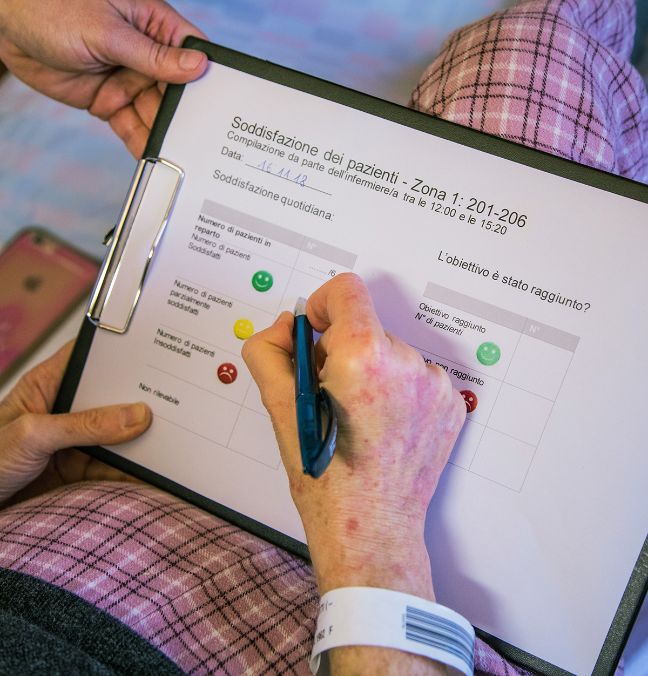
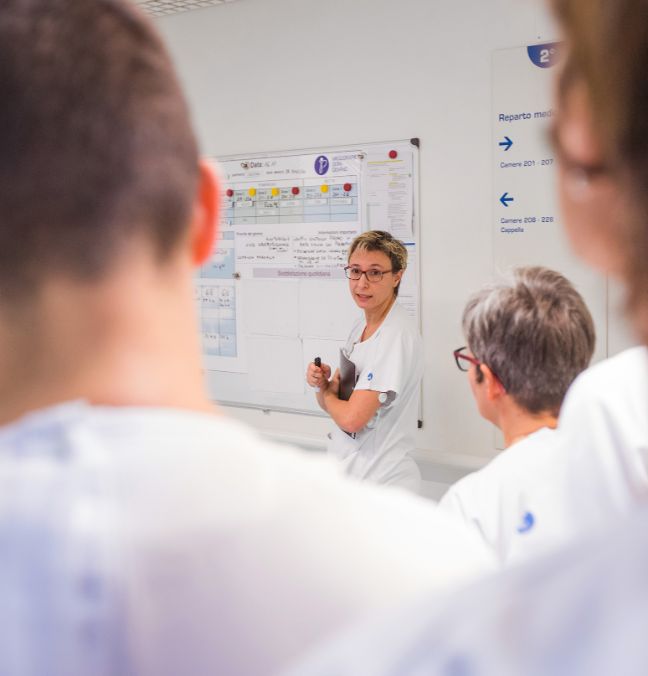
Continuously increasing quality means aiming for better patient outcomes and a better patient experience of care, supporting employees so that these goals can be achieved.

Go to the page
Security through risk management

A patient entering a hospital facility should not face any avoidable risk during his or her stay.

Go to the page
Patients' clinical pathways

The Diagnostic-Therapeutic-Assistance Pathway (PDTA) details the steps in taking care of a patient with a specific disease and aims to improve the quality, safety, and efficiency of care by decreasing the variability of clinical practices for patients with the same diagnosis.

Go to the page
Patient privacy first

Respect for privacy and the protection of patients' personal data is a priority commitment within EOC facilities where specific rules are applied to ensure the confidentiality of patients' personal and health data, in accordance with the relevant legislation.

Go to the page

FREQUENTLY ASKED QUESTIONS

The patient's role in his or her own safety

The staff of the EOC goes to great lengths to ensure that the admission of patients goes as smoothly as possible, avoiding errors and complications. The institution itself works to provide a safe and secure environment that promotes effective interventions. However, the patient, along with his or her family members and companions, can also actively contribute to improving safety during hospitalization. Indeed, safety is the result of collaboration, in which the patient also plays an essential role.

The English version of this page was created with the aid of automatic translation tools and may contain errors and omissions.
The original version is the page in Italian.