

- Acute leukemias: tumors of the hematopoietic system that present with rapid growth of immature cells and require immediate life-saving therapy, usually with admission to the inpatient ward.
- Chronic leukemias: tumors of the hematopoietic system with slower growth, including chronic lymphatic leukemia, which is the most common leukemia in elderly patients. Very innovative therapies, often in oral form, have been introduced in the treatment of these tumors in recent years.
- Lymphomas: tumors affecting the lymphatic system, which includes the lymph nodes ("the glands") and lymphocytes in the blood. The purpose of the lymphatic system is to protect the person from disease and infection, but it has the risk of tumor transformation requiring therapy.
- Multiple myeloma: cancer that affects a particular type of bone marrow cells: plasma cells. These are cells of the immune system that are responsible for producing antibodies. Patients with possible early stages (monoclonal gammopathy, asymptomatic myeloma) that do not require treatment are followed, and modern treatment is offered for patients with symptoms related to symptomatic myeloma.
- Amyloidosis: a rare disease in which proteins that have taken on an abnormal configuration form amyloid fibrils that accumulate in various tissues and organs, sometimes causing dysfunction, organ failure, and death of the subject.
- Myelodysplastic neoplasms: tumors of the hematopoietic system that often manifest as a reduction of cells in the peripheral blood and are associated with symptoms such as fatigue, bruising, or recurrent infections.
- Myeloproliferative neoplasms: tumors of the hematopoietic system that often present with increased values in the peripheral blood and a high risk of thrombosis.
- Clotting disorders: dysfunctions in the body's ability to control the formation of blood clots. They can result in insufficient clotting, leading to abnormal bleeding (hemorrhage) or excessive clotting, causing blood clots to form (thrombosis).
- Blood cell disorders: peripheral blood disorders, such as anemia and thrombocytopenias (thrombocytopenias).
Hematology


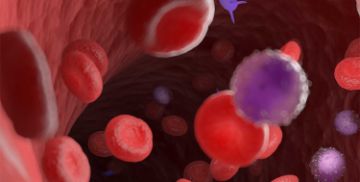
Hematology is the specialty that deals with the problems of blood and the organs that make up the hematopoietic system, that is, the set of organs and tissues in which the production of red blood cells, white blood cells, and platelets takes place.
What we treat
Blood cancers
Hematology cares for people with blood diseases, both cancerous and non-cancerous. Blood cancers are a broad category of neoplasms that account for about 10% of cancers diagnosed each year. Nowadays, treatment for patients with hematologic diseases is highly targeted and personalized.
Diagnosis and treatment
Diagnosis
The diagnostic process is done through the clinic's hematology laboratory, which analyzes blood by integrating all available techniques to arrive at an integrated diagnostic.
Treatments
- Chemotherapy: administration of medicines that aim to destroy cancer cells in the body, wherever they are found.
- Targeted therapies (targeted therapies): thanks to the development of research, in recent years there are several therapies available that are targeted toward certain genetic alterations or intracellular proteins that are responsible for tumor growth but absent in healthy cells.
- Immunological therapies: therapy by which the patient's immune system is stimulated to fight the tumor.
- Cell therapies: autologous transplantation, allogeneic transplantation (in collaboration with Basel University Hospital), CAR-T, stem cell apheresis or lymphocytes,and extracorporeal photopheresis.
>> More information (PDF) - Autologous hematopoietic stem cell transplants: administration of chemotherapy and/or radiation therapy at supra-maximal intensity (called "conditioning") followed by reinfusion of the patient's own cells collected and frozen prior to therapy.
- "CAR-T" cell therapies, Chimeric Antigen Receptor: following chemotherapy, reinfusion of T lymphocytes previously harvested from the patient and genetically modified in the laboratory is performed to enhance their action against the tumor. Follow-up to patients who have undergone allogeneic (i.e., from a donor) stem cell transplantation is offered in close collaboration with the University Hospital of Basel, where the treatment itself is performed. Read more about the program dedicated to stem cell transplantation: cell therapies program (PDF).
- Radio-oncology: radiotherapy uses high-energy ionizing radiation to "destroy" cancer cells while trying to safeguard surrounding healthy tissues and organs; this therapy may possibly be combined with hyperthermia.
- Therapies for disorders of coagulation and hemostasis: bleeding disorders are taken up at the Centro Emofilia Ticino EOC and treated by replacing missing coagulation factors; alternatively, innovative drugs that re-balance hemostasis can be used, and gene therapy is currently available for patients with severe hemophilia B. Hematology also offers consultation services for the management of patients with coagulation problems who require surgery. For patients with chronic coagulation diseases, joint care is offered in close collaboration with the treating physician. For people treated with anticoagulants of the Sintrom or Marcoumar type, courses are offered to learn self-monitoring of the intensity of this anticoagulation at home.
Patient services
Support services
Dedicated services
Approfondimenti
Centro Emofilia Ticino EOC
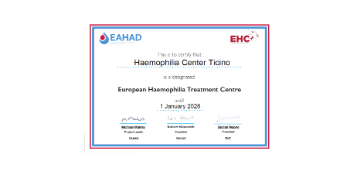
Since 2017, the Centro Emofilia Ticino EOC has been recognized as a European Haemophilia Treatment Center. As required by current standards of care, the Center is staffed by physicians, nurses, physical therapists, and laboratory technicians who specialize in hemorrhagic disorders and admit pediatric and adult patients for diagnosis and treatment of these conditions.
The Center has night-holiday on-call service for adult and pediatric patients.
Contacts for adult patients:
- daytime picket: +41 (0)91 811 94 92 (Mon-Fri 08:00 -18:00);
- night-holiday on-call service: +41 (0)91 811 91 11(asking to be put in touch with the on-call adult hematologist).
For information: +41 (0)91 811 91 47 (Mon-Fri 08:30 a.m.-5:30 p.m.)
Centro Emofilia Ticino EOC
Since 2017, the Centro Emofilia Ticino EOC has been recognized as a European Haemophilia Treatment Center. As required by current standards of care, the Center is staffed by physicians, nurses, physical therapists, and laboratory technicians who specialize in hemorrhagic disorders and admit pediatric and adult patients for diagnosis and treatment of these conditions.
The Center has night-holiday on-call service for adult and pediatric patients.
Contacts for adult patients:
- daytime picket: +41 (0)91 811 94 92 (Mon-Fri 08:00 -18:00);
- night-holiday on-call service: +41 (0)91 811 91 11(asking to be put in touch with the on-call adult hematologist).
For information: +41 (0)91 811 91 47 (Mon-Fri 08:30 a.m.-5:30 p.m.)

Contact
Istituto Oncologico della Svizzera Italiana
Ambulatorio di Ematologia
Ospedale Regionale di Bellinzona, San Giovanni
Per tutte le questioni amministrative rivolgersi al numero +41 (0)91 811 86 65 (lu - ve 08:00 - 17:00).
-
Orari di risposta al telefono
Monday : 08:30 - 17:00
Tuesday : 08:30 - 17:00
Wednesday : 08:30 - 17:00
Thursday : 08:30 - 17:00
Friday : 08:30 - 17:00
-
Chiusura dell’ambulatorio
Saturday
Sunday
Istituto Oncologico della Svizzera Italiana
Ambulatorio di Ematologia
Ospedale Regionale di Lugano, Italiano
-
Orari di risposta al telefono
Monday : 08:30 - 17:00
Tuesday : 08:30 - 17:00
Wednesday : 08:30 - 17:00
Thursday : 08:30 - 17:00
Friday : 08:30 - 17:00
-
Chiusura dell’ambulatorio
Saturday
Sunday
Istituto Oncologico della Svizzera Italiana
Ambulatorio di Ematologia
Ospedale Regionale di Mendrisio, Beata Vergine
-
Orari di risposta al telefono
Monday : 08:30 - 17:00
Tuesday : 08:30 - 17:00
Wednesday : 08:30 - 17:00
Thursday : 08:30 - 17:00
Friday : 08:30 - 17:00
-
Chiusura dell’ambulatorio
Saturday
Sunday
Istituto Oncologico della Svizzera Italiana
Ambulatorio di Ematologia
Ospedale Regionale di Locarno, La Carità
-
Orari di risposta al telefono
Monday : 08:30 - 17:00
Tuesday : 08:30 - 17:00
Wednesday : 08:30 - 17:00
Thursday : 08:30 - 17:00
Friday : 08:30 - 17:00
-
Chiusura dell’ambulatorio
Saturday
Sunday
Locations
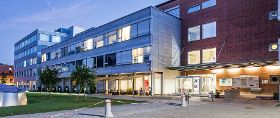
Hematology patients are treated in the department of the Oncology Institute of Southern Switzerland dedicated to hematological diseases or in outpatient clinics located in the Ospedale Regionale di Lugano, Mendrisio and Locarno.

Eventi


Locations
Hematology patients are treated in the department of the Oncology Institute of Southern Switzerland dedicated to hematological diseases or in outpatient clinics located in the Ospedale Regionale di Lugano, Mendrisio and Locarno.
The English version of this page was created with the aid of automatic translation tools and may contain errors and omissions.
The original version is the page in Italian.
