
Undergraduate medical education

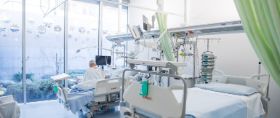
EOC, the main clinical partner of the USI Master of Medicine program, concretely promotes the practical training of medical students by offering clinical days and clinical internship periods (medical candidate) in its departments. It provides support for master's theses under the supervision of senior physicians.

From knowing how to do to being a doctor

From knowing how to do to being a doctor

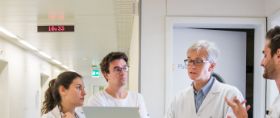
After acquiring the basics during the Bachelor's degree, in the Master's years medical students must familiarize themselves with their future profession by coming into contact with patients and the multi-professional, multi-disciplinary caring team.

With the start of the Master's program, students are initiated into clinical practice. Through observation and guidance from experienced physicians, students gradually move from knowing how to be a physician to being a physician. They will have the opportunity to make their own, while also practicing routine activities, the technical diagnostic and therapeutic gestures required for patient care.

Master's Degree in Human Medicine

The Master's in Human Medicine at Università della Svizzera Italiana (USI) is distinguished by offering a lot of clinical practice in hospitals or with physicians who are active and working in the local area.

GO TO THE PAGE

CLINICAL PRACTICE

Medical candidates

In Switzerland, the medical school curriculum traditionally includes a long period (6-9 months) of clinical practice as a "medical candidate." During this period the student attends the same department daily for one or more months, taking an active role in the patient care process. The course takes place in most cases by accompanying a physician assistant, helping him in his daily activities and learning, in a direct and concrete way, the practical details of the profession.

It is through this practice that the student has the opportunity to consolidate the notions learned during the theoretical and clinical lectures of the first years and to combine them with daily practice, all-round patient care, and the responsibilities associated with it.

This important period should confirm, as required by the Swiss PROFILES training catalog, that the medical candidate, at the end of his or her training, will be able to manage under indirect supervision a patient in the first thirty minutes of consultation, autonomously performing the activities expected of his or her role as a non-specialist physician.

STAGE

Practice in care

For the purpose of allowing an acquaintance with the realities of care prior to the start of studies, it may help to have attended, for at least one month, a hospital inpatient ward, usually as part of the nursing team (with duties comparable to those of a nurse's aide).

Although most universities today no longer require this internship, an early contact of the student with the realities of care and teamwork should always be considered a valuable educational experience for the continuation of medical studies and for the future profession of medicine.

The English version of this page was created with the aid of automatic translation tools and may contain errors and omissions.
The original version is the page in Italian.