Palliative care

Palliative care Palliative care

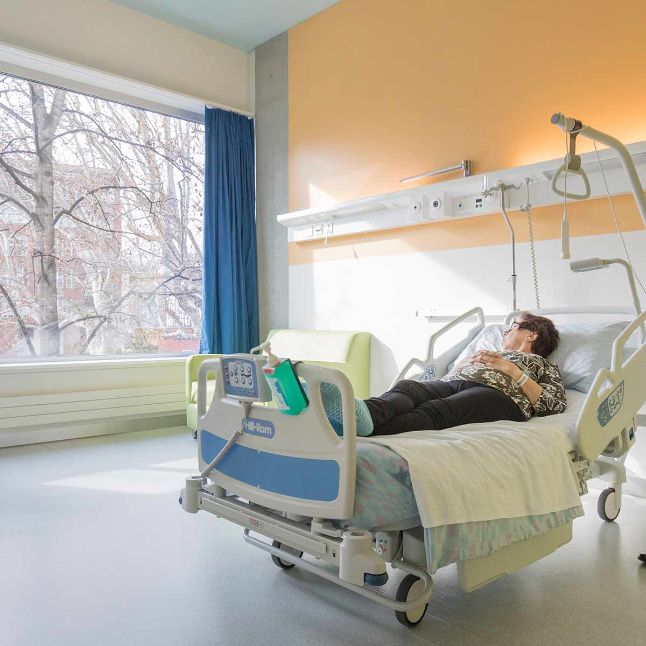
Improving quality of life, choosing by following one's own principles: palliative care accompanies patients on their journey through illness.

Palliative care

The specialty

Palliative care is a branch of medicine dedicated to people with chronic developmental diseases and their families. They aim to lay the necessary foundation for the person to maintain control over their own course of care, choosing for themselves, according to their own values and principles, through continuous and transparent communication with caregivers.

What we deal with

Progressive chronic diseases: degenerative diseases for which there are no therapies that can lead to cure. Some examples of such diseases are: advanced cancer disease, some neurological diseases (e.g., dementias, stroke with its outcomes, Parkinson's disease, amyotrophic lateral sclerosis),advanced heart failure, advanced renal disease, and severe obstructive pulmonary disease (COPD).

In general, palliative care deals with chronic developmental diseases that carry a high burden of disability, prolonged over time, with significant family and social repercussions.

Improved quality of life

The term "palliative care" can evoke strong emotions related to the concept of death, suffering and loss. It is therefore important for people to have a realistic and objective view of what palliative care is and can offer to those in need.

They aim to improve the quality of life in a global sense, remaining attentive to the physical, psychological, social and existential comfort of the sick person and his or her loved ones. They take into account the particularities of each person, offering care based on respect for one's choices regarding gender, religious-existential and cultural identity.

Palliative care integrates early on with care aimed at controlling the underlying disease, whatever it may be, allowing the sick person to actively participate in treatment choices and to know and exercise his or her rights as a patient, such as through the drawing up of an advance care plan.

Diagnosis and treatment

Palliative care can be introduced by family physicians or organ specialists (general palliative care), or, in more complex cases, referral to palliative care specialists (specialist palliative care) is necessary.

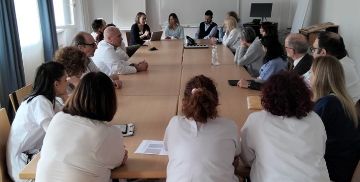
Sick people followed by a palliative care team can benefit from health, psychosocial and spiritual care provided by a group of professionals working together. The multi-professional EOC team consists of physicians, nurses, caregivers, spiritual counselors, social workers, psychologists, physiotherapists, occupational therapists and dietitians.

Palliative care must be integrated early, adding to care aimed at controlling the underlying disease. For example, when chemotherapy, dialysis or other drug therapies are underway. In order for patients to feel the maximum benefit, palliative care should be initiated as early as possible. If they are activated close to the end stage of life, they succeed only to a small extent in demonstrating their effectiveness.

Patients can ask their caregivers for a palliative care approach to be activated directly at their location, whether it is the home, hospital, or elderly home. Or they can request a specialist intake or consultation: the palliative care network in Ticino is dense and extensive.


Insights

The palliative care network in Ticino.

We would like to inform users that regarding the content referred to pallclick.ch we are observing a general content update.


See all certified Palliative Care Institutions in Switzerland.

Certifications

The EOC Palliative Care and Support Clinic has been certified at the European level by the European Society for Medical Oncology ESMO and nationally by qualitépalliative.

The EOC Palliative and Supportive Care Clinic is also recognized by the Swiss Society for Palliative Medicine(Palliative.ch) as a training center for physicians seeking in-depth interdisciplinary certification in palliative medicine.

Doctors

Contact

Centralized contact management is instrumental in making patient care more efficient, which is still ensured at all EOC sites.

Istituto Oncologico della Svizzera Italiana

Ambulatorio di Cure palliative

Ospedale Regionale di Bellinzona, San Giovanni

Durante il weekend, i giorni festivi e i notturni, la Clinica dispone di un picchetto medico.

  • Orari di risposta al telefono
    Monday : 09:00 - 17:00
    Tuesday : 09:00 - 17:00
    Wednesday : 09:00 - 17:00
    Thursday : 09:00 - 17:00
    Friday : 09:00 - 17:00

Eventi

Currently there are no scheduled events or trainings, discover past events.

Locations

The Clinic is present at the five main sites of the Ente Ospedaliero Cantonale (at Ospedale la Carità in Locarno, Ospedale di Bellinzona, San Giovanni, Ospedale di Mendrisio, Beata Vergine and at the Ospedale Civico and Ospedale Italiano in Lugano), for inpatient and outpatient evaluations and intake.

The English version of this page was created with the aid of automatic translation tools and may contain errors and omissions.
The original version is the page in Italian.