




Ophthalmology is the medical and surgical discipline that prevents, diagnoses and treats diseases affecting the eyes; it is concerned with preserving the patient's visual acuity, either by medical or surgical treatment techniques or through external elements, such as eyeglasses. Ophthalmology is a discipline rich in specific areas, including neuro-ophthalmology, which deals with pathologies of the optic nerves.
Ophthalmology

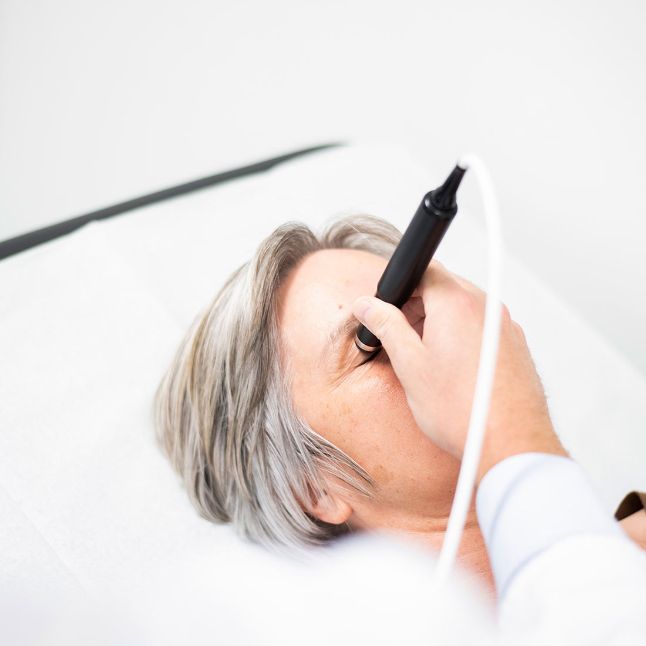
Visual disorders and eye diseases: medical and surgical ophthalmologic diagnosis and treatment.
The specialty
What we treat
- Maculopathies: degeneration of the macula with loss of central vision; there are mainly two forms: dry and wet.
- Retinal detachment: for different reasons, the retina (transparent membrane on the ocular fundus) may be torn resulting in separation from the layer underneath.
- Uveitis: inflammation of the uvea (pigmented layer between the retina and sclera) that can involve various segments of the eye (iris/ciliary body, retina).
- Dry eye disease (dry eye syndrome): tear film disorders due to reduced tear production or from poor tear film quality.
- Cataract: opacification of the natural lens, which reduces the amount of light passing into the eyes and consequently visual quality.
- Glaucoma: a condition that causes loss of vision; usually arises in the presence of higher than normal intraocular pressure resulting in optic nerve damage.
- Strabismus: lack of proper eye coordination with deviation of one eye from the other; in children, risk of functional loss (ambioplia).
- Optic neuritis: inflammation of the optic nerve due to infection (bacterial or viral) or degenerative diseases of the central nervous system (e.g., multiple sclerosis).
- Ischemic optic neuropathy: synonymous with optic nerve infarction, caused by lack of blood supply.
- Ophthalmoplegia: paralysis of one or more eye muscles that can afflict eye movement or focusing (accommodation).
- Dermatocalasis: excess skin on the upper eyelids; eyelid skin may cover part of the visual field and obstruct vision.
- Ptosis: drooping of the upper eyelid due to weak connective tissue to the point of causing visual obstruction.
- Ectropion: outward eversion of the lower eyelid, may cause excessive tearing or incomplete eyelid closure.
- Entropion: inward inversion of the lower eyelid with the eyelashes rubbing against the ocular surface with the risk of causing corneal erosion.
- Chalazion: inflammation of a gland found in the eyelids (Meibomian glands); often manifests as a painful swelling.
- Blepharitis: inflammation of the eyelid margin; blepharitis alters the quality of the tear film often causing eye irritation.
- Eyelid tumors: benign changes (e.g., fibromas, papillomas, warts) and malignant tumors (basaliomas, spinaliomas, melanomas).
- Scleritis: Scleritis is an inflammation of the sclera of the eye. Scleritis usually develops in connection with rheumatic diseases.
Diagnosis and treatment
Diagnosis
Diagnosis of eye diseases is initially based on symptoms, the appearance of the eyes, and the results of various examinations:
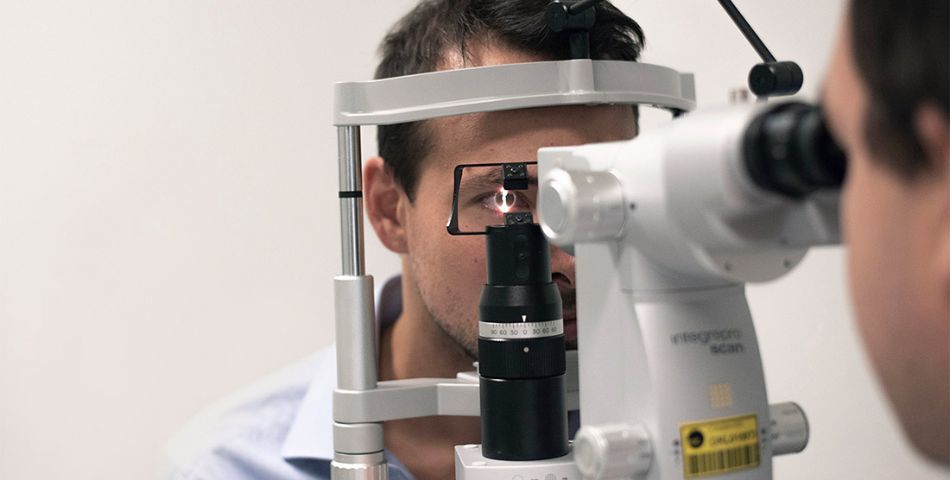
- clinical ophthalmologic examination: is used to assess the patient's ability to see and consists of refraction, visual field examination, slit-lamp examination, tonometry, and functioning of the cranial nerves that innervate the extraocular muscles; other examinations follow to confirm a diagnosis or to determine the severity of the disorder;
- angiography: involves injecting a dye into the vessels to make them more visible in imaging tests;
- ultrasonography: useful if the ophthalmoscope or slit lamp fails to visualize the retina due to some factor hindering focus; used to determine the nature of abnormal structures (e.g., tumor, retinal detachment), to examine blood vessels, to determine corneal thickness;
- pachymetry: measurement of corneal thickness; important in refractive optical surgery;
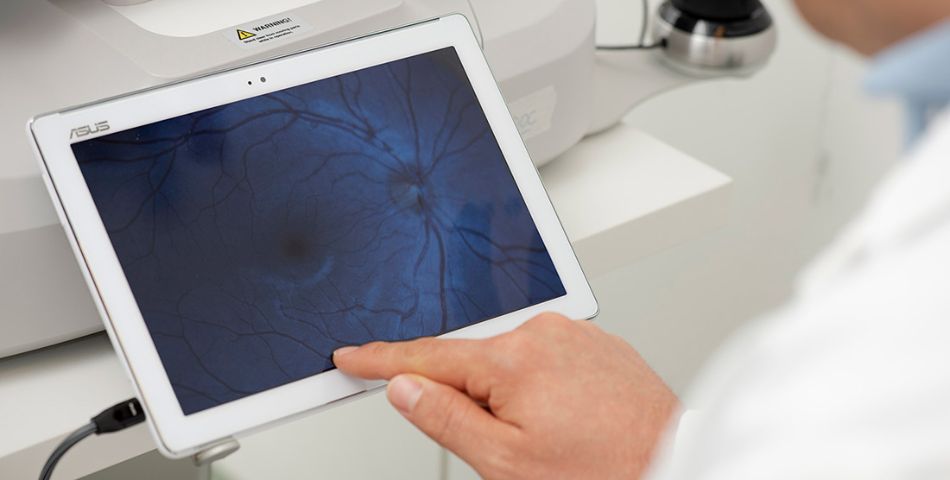
- optical coherence tomography (OCT): provides high-resolution images of structures on the ocular fundus (e.g., optic nerve, retina, choroid, and vitreous humor); used to visualize retinal disorders (e.g., macular degeneration and glaucoma).
Treatments
Depending on the diagnosis of the condition affecting the eye, the recommended treatments vary:
- dietary supplements: for example, in the case of dry macular degeneration, taking them slows its progression;
- pharmacological and topical therapies: for example, the prescription of medications such as eye drops or ophthalmic ointments;
- external visual aids: use of eyeglasses, contact lenses (for example, prismatic lenses to correct strabismus);
- surgical therapy: for example, retinal detachment is treated with laser surgery, cryotherapy (cryocoagulation), cerclage (placing a silicone band around the eye), and vitrectomy (removing the vitreous humor behind the lens); for strabismus, surgical treatment targets the extraocular muscles;
- removal of tumors in the eyelid region: tumors in the eyelid region are typically removed on an outpatient basis via surgical excision with intraoperative histological examination;
- complex eye conditions: tumors in the eyelid region are typically removed on an outpatient basis via surgical excision with intraoperative histological examination:
- the pathologist reviews the specimen as soon as the surgeon removes the tumor;
- eyelid reconstruction can then be performed on the same day.
Patient services
Support services
Insights
Complex eye diseases: peculiarities of the Ophthalmology Service
- The Ophthalmology Service is the only facility in Ticino that has dedicated beds available for inpatient treatment of complex eye diseases.
- In case of complex corneal problems, it makes use of collaboration with specialized centers beyond the Alps.
Recognized training center
The Service of Ophthalmology is a federally recognized training center by the Swiss Institute of Medical Education (ISFM) for FMH specialist training in ophthalmology and ophthalmic surgery.
Frequently asked questions
How does the Servizio di Oftalmologia at the Ente Ospedaliero Cantonale differ from other centers?
The EOC Ophthalmology Department is a hospital service that stands out for its excellent specialized care and close interdisciplinary collaboration, both within the Ophthalmology Department and with other medical and surgical disciplines at the EOC. In recent years, the Department of Ophthalmology has significantly expanded its clinical services, academic engagement, and research activities, thanks in part to the involvement of specialists with extensive national and international experience. This model has fostered a constantly evolving work environment and enables the integrated management of patients with often complex eye conditions, which in some cases require expertise and resources that are difficult to obtain outside a hospital setting. The structure of the Servizio di Oftalmologia also allows for the management of urgent situations with access to the operating room even outside normal working hours. The EOC also operates the canton’s only dedicated Ophthalmic Emergency Department, serving as a go-to resource for eye emergencies.
Is it possible to be referred by another doctor or ophthalmologist?
Yes, the Servizio di Oftalmologia accepts patients referred by their primary care physician, an ophthalmologist, or a specialist in another field. A referral is particularly recommended in cases requiring a specialist evaluation, further diagnostic testing, or multidisciplinary care.

Contact
Istituto di Neuroscienze Cliniche della Svizzera Italiana
Ambulatorio di Oftalmologia
Ospedale Regionale di Mendrisio, Beata Vergine
-
Orari di risposta al telefono
Monday : 08:30 - 12:00 / 14:00mar - 16:30
Tuesday : 08:30 - 12:00 / 14:00mar - 16:30
Wednesday : 08:30 - 12:00 / 14:00mar - 16:30
Thursday : 08:30 - 12:00 / 14:00mar - 16:30
Friday : 08:30 - 12:00 / 14:00mar - 16:30
-
Chiusura dell’ambulatorio
Tuesday
Thursday
Saturday
Sunday
Ambulatorio di Oftalmologia
Ospedale Regionale di Bellinzona, Acquarossa
-
Orari di risposta al telefono
Monday : 08:30 - 12:00 / 14:00 - 16:30
Tuesday : 08:30 - 12:00 / 14:00 - 16:30
Wednesday : 08:30 - 12:00 / 14:00 - 16:30
Thursday : 08:30 - 12:00 / 14:00 - 16:30
Friday : 08:30 - 12:00 / 14:00 - 16:30
-
Chiusura dell’ambulatorio
Saturday
Sunday
Istituto di Neuroscienze Cliniche della Svizzera Italiana
Ambulatorio di Oftalmologia
Ospedale Regionale di Lugano, Italiano
-
Orari di risposta al telefono
Monday : 08:30 - 12:00 / 14:00 - 16:30
Tuesday : 08:30 - 12:00 / 14:00 - 16:30
Wednesday : 08:30 - 12:00 / 14:00 - 16:30
Thursday : 08:30 - 12:00 / 14:00 - 16:30
Friday : 08:30 - 12:00 / 14:00 - 16:30
-
Chiusura dell’ambulatorio
Saturday
Sunday
Ambulatorio di Oftalmologia
Ospedale Regionale di Bellinzona, Faido
-
Orari di risposta al telefono
Monday : 09:00 - 11:30 / 13:30 - 16:00
Tuesday : 09:00 - 11:30 / 13:30 - 16:00
Wednesday : 09:00 - 11:30 / 13:30 - 16:00
Thursday : 09:00 - 11:30 / 13:30 - 16:00
Friday : 09:00 - 11:30 / 13:30 - 16:00
-
Chiusura dell’ambulatorio
Saturday
Sunday
Related News





Events
Currently there are no scheduled events or trainings, discover past events.
Locations
The Servizio di Oftalmologia is an integral part of the Istituto di Neuroscienze Cliniche della Svizzera Italiana and is headquartered at the Ospedale Italiano in Lugano.
The English version of this page was created with the aid of automatic translation tools and may contain errors and omissions.
The original version is the page in Italian.
