

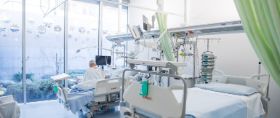
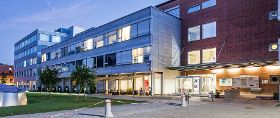
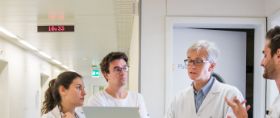
As with other high-incidence cancers, the EOC model of care in the care of the breast cancer patient is the Specialty Oncology Centers (COS), the most modern and effective response to the cancer disease.
Breast oncology
Breast oncology is the medical discipline devoted to the health and treatment of breast disease. It includes breast cancer prevention and counseling in the case of, for example, familial predisposition.
The specialty
The Oncology Center
Centers of expertise structured by organ, EOCs organize and optimize the care of the patient with cancer disease in a multidisciplinary and interprofessional care network. The model involves the cross-disciplinary and coordinated involvement of professionals with complementary specializations, the centralization of highly specialized services, and an accompanying service to treatment and recovery in all EOC hospitals.
Thanks to this model of care, EOC offers all Ticino patients up-to-date treatment protocols on the highest international standards and access to the best diagnostic, therapeutic and care pathway.
What we treat
Breast cancer: uncontrolled multiplication of certain cells in the mammary gland that transform into malignant cells and acquire the ability to break away from the tissue that generated them to invade surrounding ones and spread throughout the body.
The importance of mammography screening
In the 50-69 age group, mammography for early detection of breast cancer is strongly recommended every two years, even in the absence of symptoms or palpable lumps (so-called "screening" mammography).
Screening mammography allows detection of even small tumors (less than 1 cm), which in most cases have not yet developed lymph node or distant metastases. This increases the chances of cure: in fact, tumors smaller than 1 cm have a 95% chance of cure.
Mammography performed as part of a screening program differs from mammography requested by the attending physician or gynecologist and is performed only in centers accredited by the screening program of Canton Ticino. The Centro di Senologia della Svizzera Italiana is one of the accredited centers for this examination.
Diagnosis and treatment
Diagnosis
During the first visit, the senologist will proceed with:
- Medical history.
- Clinical examination of the breast: observation phase and palpation phase.
- Ultrasound examination: simple and painless procedure to visualize the breast structure with great precision.
Follow-up examinations for diagnosis:
- Mammography (breast X-ray) with tomosynthesis (which allows greater precision and less compression of the breast).
- Ultrasound.
- MRI (magnetic resonance imaging or MRI).
- Fine needle sampling, performed "freehand" or under ultrasound guidance.
- Percutaneous biopsy, performed "freehand," under ultrasound, mammography or MRI guidance.
- Vacuum-assisted macrobiopsy, which is a breast tissue sampling.
- Sentinel lymph node: search and marking, identification and removal of sentinel lymph node, histological examination.
Treatments
To treat breast cancer, there are many possible treatments and, often, it is the combination of them that leads to the resolution of the problem: in each patient, the choice of treatment and its duration is based on the personal disease situation, age, and any concomitant diseases to package a treatment program that is as targeted as possible.
- Medical oncology ( non-surgical anticancer therapies):
- Use of anticancer drugs, effective as preparatory, precautionary, or in case of tumor recurrence.
- Anti-hormonal treatments, which block the stimulation of cancer cells by female hormones produced by the body.
- Chemotherapy, which destroys cancer cells that are multiplying.
- Biologic therapies that act on targets present on only certain types of cancer cells.
- Immunotherapy , which works by stimulating the immune system to destroy cancer cells.
- Regular checks over time(follow-up).
- Radio-oncology: radiation therapy uses high-energy ionizing radiation to "destroy" cancer cells while trying to safeguard surrounding healthy tissues and organs.It is an outpatient treatment and does not involve invasive procedures. Thanks totechnological advances and the use of sophisticated techniques (3D conformal radiotherapy, intensity-modulated radiotherapy, image-guided radiotherapy), it is possible to deliver the correct dose to the breast and lymph node volume while keeping the dose to healthy organs below thresholds.
- Breast surgery:
- Genuine breast surgery: removal of the tumor by breast-conserving surgery (suitable in the case of early-stage breast cancer in all cases where there are no contraindications) or removal of the entire breast (mastectomy, indicated for patients who are not candidates for breast-conserving surgery).
- Reconstructive surgery: operations aimed at correcting the shape of a part of the body that presents an abnormality with respect to what is considered anatomical normality: an abnormality may be congenital, i.e., present from birth, or acquired (secondary) as a result of disease, trauma, surgery of various kinds.
- Genetic counseling: targets people in whom, based on personal or family history, the predisposition to develop breast and/or ovarian cancer is to be investigated.
Each diagnostic and therapeutic course is discussed in a multidisciplinary way and adapted on a case-by-case basis, based not only on the extent or biological characteristics of the tumor, but also on the peculiarities of the individual (or individual) patient, such as general health status, pre-existing diseases, drug therapies already in place, familiarity, expectations, wishes, family planning, etc.
Patient services
Support services

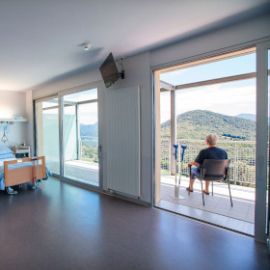
Clinical and diagnostic services

Dedicated services
Insights
Clinical trials and international collaborations
The Centro di Senologia della Svizzera Italiana, which has always been very attentive to clinical and translational research and has academic ambitions, has endowed itself with a "research board," consisting of members representing different specialties (medical oncology, radiation oncology, breast surgery, plastic surgery, radiology, genetics, nursing sciences, etc.). It is the multi and interdisciplinary tool to screen, create and stimulate new scientific projects and collaborations both national (e.g., IOR, IRB, SAKK...) and international (ESO, IBCSG, BIG...) It is in fact known that the best results for patients are obtained only in centers where scientific research is actively done.
Multi-disciplinary-meeting APAR
The Centro di Senologia della Svizzera Italiana has an outpatient clinic dedicated to women at high risk of developing breast cancer (Ambulatorio Pazienti ad Alto Rischio - APAR). This outpatient clinic offers services of the highest quality, complementing oncology genetic counseling for all those people who, due to personal or family history, have a higher risk than the general population of developing cancer.
The outpatient clinic, coordinated by Dr. med. Rossella Graffeo Galbiati, applies internationally validated algorithms and performs any tests for DNA mutations, in order to assess individual risk and define specific surveillance plans with preventive and therapeutic options oriented by international guidelines that are constantly updated with research results. APAR thus targets individuals with cancer diseases and known hereditary predisposition; healthy individuals with known hereditary predisposition; and healthy individuals with high familiarity for cancer diseases.
The proposed course of action for the patient starts with a clinically thorough interview that is also attentive to the person's psychological and emotional implications. If the need for genetic testing (a simple blood draw) is established, it is proposed with the aim of identifying any genetic defects that predispose to the disease. Then, the APAR team assesses the risk of getting sick (or re-sick) through a personalized assessment performed by a multidisciplinary team. APAR makes use of facilities, expertise and networks of experience already present and radical in the EOC and in the territory, facilitating the optimal integration of different services, covered by health insurance.
Managing the return home
Useful information for patients returning home following breast treatment.
Certifications
Breast Centres Certification
Centro di Senologia della Svizzera Italiana (CSSI) has been committed from the beginning to the quality of care and services offered to patients. The implementation of a quality system, the application of internationally defined quality standards and the maintenance of these standards over time have allowed CSSI to be the first Swiss center certified as a Breast Unit both at the European level (EUSOMA recognition in 2009 and maintained to date) and at the national level (Q-label recognition awarded by the Swiss Cancer League and the Swiss Society of Senology in 2014).
Above all, the two certifications represent a guarantee for patients, assuring them that CSSI operates according to well-defined methodologies, with accredited specialists and modern equipment, continuously monitoring its performance through quality indicators.
These allow not only the identification of possible areas for improvement within its activities, but also comparison with other facilities in the field nationally and internationally.
Quality and Safety of Care
Multidisciplinary Meetings
Multidisciplinary meetings (MDMs) are a tool designed to further ensure the quality and safety of the care provided.
- Deadline for adding patients to the pre- and post-operative MDM: Monday at 5:00 p.m.
- MDM held on Tuesday at 5:00 p.m.
In addition to being a mandatory requirement for obtaining certifications, multidisciplinary meetings aim to ensure that patients have access to the best treatment decisions by involving multiple specialists in the planning and management of pre- and post-operative care.

Contact
Centralized contact management is instrumental in making patient care more efficient, which is still ensured at all EOC sites.
Istituto Oncologico della Svizzera Italiana
Ambulatorio di Oncologia del seno
Ospedale Regionale di Bellinzona, San Giovanni
-
Orari di risposta al telefono
Monday : 09:00 - 11:30 / 13:30 - 16:30
Tuesday : 09:00 - 11:30 / 13:30 - 16:30
Wednesday : 09:00 - 11:30 / 13:30 - 16:30
Thursday : 09:00 - 11:30 / 13:30 - 16:30
Friday : 09:00 - 11:30 / 13:30 - 16:30
-
Chiusura dell’ambulatorio
Saturday
Sunday
Locations
Breast oncology is taken care of by the Centro di Senologia della Svizzera italiana, which operates at the Regional Hospital of Lugano and the Regional Hospital of Bellinzona.
Related News




The English version of this page was created with the aid of automatic translation tools and may contain errors and omissions.
The original version is the page in Italian.
