


Pelvic perineal physiotherapy
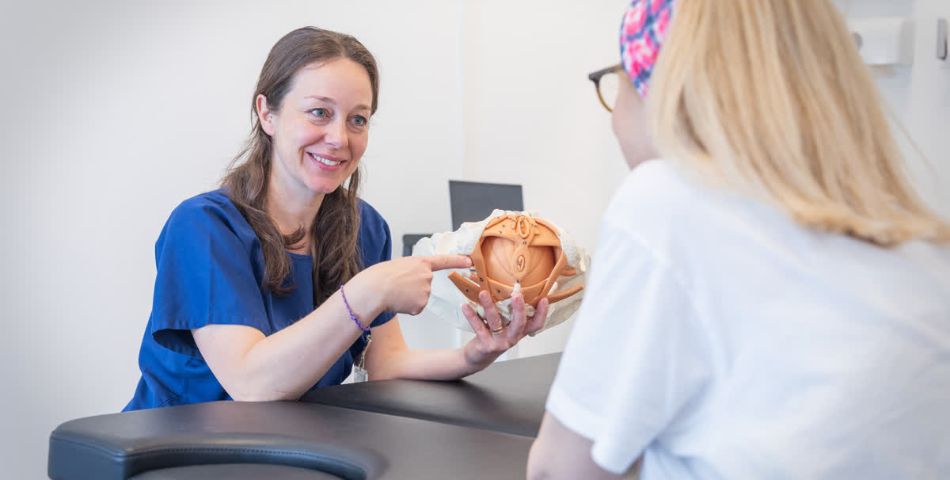
The pelvic floor is that set of muscles, ligaments, and fascia that enclose the lower part of the pelvis. Its role is essential for the support of the internal organs to the abdominal cavity promoting good function.
Rehabilitation aims at the prevention, resolution or improvement of urogenital problems that can be divided into anatomical such as prolapses, altered muscle tone and functional, related to alterations in the containment and emptying of urine and feces by the bladder and rectum. Such problems lead to urinary and/or fecal incontinence or urgency as well as urinary retention and/or constipation. Neglected they can result in chronic pain and impaired sexual function.
The goal is to improve the tone and elasticity of the pelvic floor muscles, correct bad habits with precise indications to be implemented, restore dedicated muscles by strengthening them or ensuring relaxation and return to as physiological a condition as possible. Rehabilitative work is carried out through awareness of the pelvic area, along with its functions and structures, learning proper muscle activation in a functional manner, improving proprioception and the ability to relax and recruit, applying manual techniques, therapeutic exercise and relaxation techniques.
It is also possible to take advantage of the use of electro-medical equipment for instrumental physical therapy (electrostimulation, biofeedback, TECAR), which act as a support for obtaining results in terms of muscle strengthening, proprioception, healing/healing of injured tissues.
It is a special area of rehabilitation, since anatomically (and not only) it involves the intimate sphere, which is little known, still the subject of taboos and misinformation, and furthermore rich in multiple psycho-socio-cultural meanings. Therefore, pelvic perineal rehabilitative work carries with it a strong psycho-emotional impact, which can be well managed and designed only by specifically trained personnel.
Summarizing the problems that can be solved by pelvic perineal rehabilitation are:
- urinary incontinence;
- fecal incontinence;
- prolapses;
- pelvic pain;
- constipation;
- sexual functional alterations.