

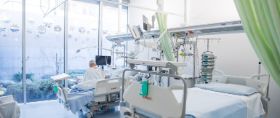
Neurosurgery is the discipline that deals with the surgical treatment of diseases of the brain, spinal cord, peripheral nerves, skull, and spine.
Neurosurgery
Comprehensive patient management, professionalism of the team, technological innovations, and above all, scientific research are the ingredients for a modern Neurosurgery with a national and international presence.
The specialty
What we treat
- Headtrauma: head trauma very often also affects the brain and is frequently associated with injuries elsewhere in the body.
- Brain tumors: neoplasms, either arising in the brain (primary tumors), or resulting from the spread to the brain of tumors from other regions of the body (metastases); tumors may affect, not only the brain, but also other structures within the skull, for example, the meninges and bone.
- Pathologies of the pituitary gland: these are usually tumors; they almost always involve abnormalities in the functioning of the pituitary gland and thus in hormone production.
- Aneurysms, cavernous angiomas, cerebral vascular malformations: these are abnormalities of vessels (arteries and veins), which can dilate and rupture causing bleeding, sometimes with serious consequences; in some cases they cause seizures or focal deficits.
- CSFcirculation disorders: cerebrospinal fluid (called CSF) circulates beneath the meninges, which line the brain and spinal cord; it is continuously produced and reabsorbed. Several pathologies can alter the mechanisms of production, circulation and reabsorption of this substance.
- Facial pain: many pathologies (vascular abnormalities, trauma, tumors) can affect the nerves responsible for pain transmission in the head and face, particularly the trigeminal nerve and glossopharyngeal nerve.
- Spinal trauma: usually the result of accidents, or falls and often involves, not only the vertebrae, but also the ligaments and nerves contained within the spine.
- Herniated disc: this is the leakage of a central portion of the disc through a rupture of the ring of ligaments, which normally contains it, allowing it to act as a "shock absorber" between the vertebrae; herniations can form at the cervical, dorsal, and lumbar levels and can result in pain and neurological deficits due to compression of the nerves or spinal cord.
- Spinal canal stenosis: represents a narrowing of the spinal canal; found more in the elderly, can cause pain, neurological deficits, particularly difficulty walking; can affect all levels of the spine, but is found more in the lumbar region.
- Degenerative diseases of the spine: set of changes to which the spine undergoes over the years with involvement of the vertebrae, discs and ligaments, often resulting in involvement of nerve structures and the appearance of instability of the spine itself.
- Osteoporotic fractures: these are fractures of the vertebrae, which, due to reduction of calcific content, can also occur spontaneously or after minor trauma.
- Spinal tumors: may affect the bony structures of the spine, as well as the meninges, spinal cord, and nerves; often involve neurological deficits; very often metastases.
- Nervous system and spine infections: potentially all micro-organisms can reach the nervous system, skull and spine with abscess formation; when infection reaches a disc, it is called "spondylodiscitis."
- Spinal vascular malformations: these are abnormalities of vessels (arteries and veins), which can dilate or rupture, causing neurological deficits from compression of nerve structures, or from bleeding.
Diagnosis and treatment
Diagnosis
For disease diagnosis, neurological examination is very useful, but invariably it is combined with instrumental examinations, in particular:
- CT and MRI, both for the study of the brain and spine.
- X-rays are still used in spinal surgery, especially in cases of fractures.
Because of the complexity of the nervous system, neurosurgery relies on high-tech instruments for both diagnosis and treatment of disease, and almost all surgeries are performed under microscopy.
Treatments
Below are the treatments that neurosurgery uses for specific conditions:
- Head trauma: craniotomy surgery is often required to evacuate a hematoma, or to reduce pressure inside the skull; in severe cases, a brain probe is also placed to detect endocranial pressure.
- Brain tumors: when treatable and anatomically attackable, may require removal surgery by craniotomy. Cranial microsurgery treatments are performed using neuo-physiologic monitoring systems, neuronavigation, augmented reality systems with oncology tracers (e.g., 5ALA); "awake surgery" is performed when certain functions such as speech, comprehension, reading, etc. need to be evaluated. All cases are discussed in a multidisciplinary setting at the Onco-Board.
- Pathologies of the pituitary gland: pituitary tumors are sometimes removable through a transnasal approach; very often the surgery is accompanied by medical therapies aimed at correcting any hormonal changes caused by the neoplasm. The transnasophenoidal approach is a minimally invasive endoscopic approach teamed with specialists in the ENT department.
- Aneurysms, cavernous angiomas, cerebral vascular malformations: often microsurgical exclusion of the aneurysm or removal of the cavernous angioma or vascular malformation is required; for aneurysms and vascular malformations, treatment may consist of an endovascular procedure, or again microsurgery and endovascular procedure are both employed. In case of bleeding, treatments are performed on an emergency basis. Microsurgical treatments involve state-of-the-art hybrid rooms with the possibility of combined interventions (neurosurgeon and neuroradiologist), neurophysiological monitoring systems, and navigation. All cases are discussed at the Vascular Board (neurosurgeons and neuroradiologists). In the field of cavernous angiomas, there is a specific research center with international trials at the EOC department. Lugano neurosurgery is a vascular center of highly specialized MAS medicine recognized at the Swiss level.
- CSFcirculation disorders: the classic procedure is to create an alternative circulation to CSF by having it drained from the encephalon to the abdomen, or to the heart (ventriculo-peritoneal shunt, or atrial shunt respectively).
- Facial pain: the most common procedure is to resolve a conflict between the nerve and a vessel through a small craniotomy; in some cases, however, the nerve is infiltrated, or compressed, or even cauterized at the point where it emerges from the skull, and the accuracy of the procedure is ensured by the use of intraoperative CT.
- Spinal trauma: treatment is highly variable and depends on the severity of the injuries; it can range from pain management, to the application of external orthoses, to interventions of varying complexity, which aim to restore stability to the spine and safeguard nerve structures through the use of screws and cages.
- Herniated disc: treatment can be pharmacological and, in cases where pain is refractory to oral, intramuscular or intravenous therapies, an infiltration close to the course of the affected nerve(periradicular infiltration) may come into account; very often, however, the herniated disc must be removed surgically, by a minimally invasive approach particularly when compression of the nerve tissues produces neurological deficits.
- Spinal canal stenosis: treatment may be pharmacologic and, in cases where pain is refractory to oral, intramuscular, or intravenous therapies, an infiltration within the spinal canal(peridural infiltration) at the most severely narrowed area may come into consideration; often, however, microdecompression surgery of the canal is necessary, especially when neurological deficits are present and when walking becomes very difficult; minimally invasive surgery with short hospital stay and prompt physical recovery.
- Degenerative diseases of the spine: treatment may be pharmacological and, in cases where pain is refractory to oral, intramuscular or intravenous therapies, infiltrations of different types at the level of the spine(periradicular, peridural, facet) may come into the line of account; often interventions are necessary with the aim of decompressing nerve structures, correcting abnormal curvatures, and restoring stability to the spine by use of screws and cages. All surgeries are performed using high-tech systems with intraoperative CT scans, hybrid rooms and navigation systems; many approaches are minimally invasive with average hospital stay of three days.
- Osteoporotic fractures: treatment can be conservative: frequently the fractured vertebrae are treated with cementation techniques; more rarely, it is necessary to perform spine stabilization surgery using screws.
- Spinal tumors: neurosurgery treats pain-causing tumors that create spinal instability and compression of nerve structures with operations. In some cases, screws and cages must be used. The facility is able to perform complex oncologic neurosurgery, vertebral reconstructions through minimally invasive approaches and often in collaboration with vascular and general surgeons.
- Nervous system and spinal infections: the treatment of choice remains the use of antibiotics; however, interventions may be needed to drain abscesses at the level of the brain, or the spinal canal; more rarely, operations are needed to restore stability to the column affected by an infection.
- Spinal vascular malformations: these are often dural arteriovenous fistulas or small malformations that may require surgeries to close abnormal vessels in some cases by surgery, in others by an endovascular approach, or still using both procedures.
Much of neurosurgery uses sophisticated techniques and equipment that increase precision and, therefore, reduce the risk to the patient:
- Microscope: facilitates manipulation of extremely small anatomical structures.
- Intraoperative CT: allows for real-time imaging of the anatomical situation.
- Intraoperative ultrasound: helps locate lesions.
- Satellite navigation system: guides the surgeon's instruments by displaying them on a screen.
- Stereotaxy: computerized technique that uses Cartesian coordinates to reach a deep structure with absolute precision.
- Intraoperative neuromonitoring: allows the monitoring of major neurological functions and the identification of specific anatomical structures by studying the electrical activity of the central and peripheral nervous system during neurosurgery and thus helps reduce postoperative deficits.
Patient services
Support services
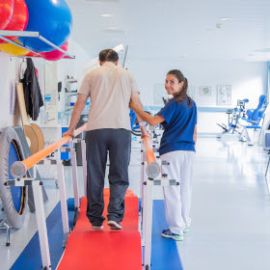
Dedicated services
Insights
Center philosophy behind spine surgery
- To provide the patient with a high technical level and increasingly modern technological instrumentation that can make each surgery as safe as possible.
- To pose surgical indications in compliance with national and international guidelines to ensure increasingly less invasive treatment and avoid overtreatment.
- Spinal pathology is a strength of this department and is managed by a multidisciplinary team consisting of neurosurgeons, pain therapists, neuroradiologists, neurologists, neuropsychologists, and neurorehabilitationists.
- The latest techniques in both surgery and rehabilitation are used; this constitutes a true multi-specialty spine center for the comprehensive management of the patient with lumbar, dorsal, and cervical spine disorders.
GMT&Co (Trigeminus &Co Multidisciplinary Group)
A pool of specialists (neurosurgeon, neurologist, pain therapist, otolaryngologist, maxillofacial surgeon, neuroradiologist, radiation oncologist) analyze complex cases of facial pain.
The patient's file is evaluated in a simultaneous mode by all specialists.
Preliminary evaluation of the records is followed by the examination, which may be with one, or with multiple specialists, possibly by videoconference.
The process allows the patient to very quickly obtain a diagnostic hypothesis and possible multi-specialist therapeutic guidance.
Functional pain neurosurgery
At the Neurocenter, a team of experts in neurosurgery, neurology, and neuroanesthesia collaborate in the diagnosis and treatment of pain, which originates from the spine. A dedicated multidisciplinary team takes specific care of the patient with facial pain.
Neurosurgery complements neurology and collaborates with the University Hospitals of Bern, Geneva, and Lausanne for the management of the patient carrying deep brain stimulation (DBS) system in Parkinson's disease and vagal stimulator for epilepsy control.
Type "A" training center certified by the ISFM
Lugano Neurosurgery is a type "A" training center certified by the Swiss Institute for Medical Education (ISFM) and is therefore able to guarantee the training of young neurosurgeons of the future in both the cranial and spinal fields. The presence in the EOC of the Faculty of Biomedical Sciences of the University of Italian Switzerland (USI) fosters a continuous didactic and clinical interchange between the two institutions, which turns out to be the great added value of a Hospital of international stature.

Contacts
Istituto di Neuroscienze Cliniche della Svizzera Italiana
Ambulatorio dei Dolori facciali
Ospedale Regionale di Lugano, Civico
-
Orari di risposta al telefono
Monday : 09:00 - 12.00 / 14:00 - 16:00
Tuesday : 09:00 - 12.00 / 14:00 - 16:00
Wednesday : 09:00 - 12.00 / 14:00 - 16:00
Thursday : 09:00 - 12.00 / 14:00 - 16:00
Friday : 09:00 - 12.00 / 14:00 - 16:00
-
Chiusura dell’ambulatorio
Saturday
Sunday
Istituto di Neuroscienze Cliniche della Svizzera Italiana
Ambulatorio di Neurochirurgia
Ospedale Regionale di Mendrisio, Beata Vergine
-
Orari di risposta al telefono
Monday : 08:30 - 12:00 / 14:00 - 16:30
Tuesday : 08:30 - 12:00 / 14:00 - 16:30
Wednesday : 08:30 - 12:00 / 14:00 - 16:30
Thursday : 08:30 - 12:00 / 14:00 - 16:30
Friday : 08:30 - 12:00 / 14:00 - 16:30
-
Chiusura dell’ambulatorio
Saturday
Sunday
Istituto di Neuroscienze Cliniche della Svizzera Italiana
Ambulatorio di Neurochirurgia
Ospedale Regionale di Lugano, Civico
-
Orari di risposta al telefono
Monday : 09:00 - 12:00 / 14:00 - 16:00
Tuesday : 09:00 - 12:00 / 14:00 - 16:00
Wednesday : 09:00 - 12:00 / 14:00 - 16:00
Thursday : 09:00 - 12:00 / 14:00 - 16:00
Friday : 09:00 - 12:00 / 14:00 - 16:00
-
Chiusura dell’ambulatorio
Saturday
Sunday
Istituto di Neuroscienze Cliniche della Svizzera Italiana
Ambulatorio di Neurochirurgia
Ospedale Regionale di Locarno, La Carità
-
Orari di risposta al telefono
Monday : 08:30 - 11:30 / 14:00 - 16:30
Tuesday : 08:30 - 11:30 / 14:00 - 16:30
Wednesday : 08:30 - 11:30 / 14:00 - 16:30
Thursday : 08:30 - 11:30 / 14:00 - 16:30
Friday : 08:30 - 11:30 / 14:00 - 16:30
-
Chiusura dell’ambulatorio
Saturday
Sunday
Locations
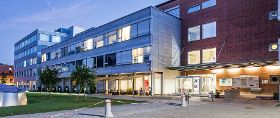
The Neurosurgery Service is available on an outpatient and inpatient basis at the Ospedale Regionale di Lugano, Civico, and at the outpatient clinic of the Ospedale Regionale di Locarno, La Carità.


The English version of this page was created with the aid of automatic translation tools and may contain errors and omissions.
The original version is the page in Italian.
