

General Information
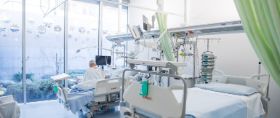
In Intensive Care Medicine, patients are admitted who require special surveillance and care because they have diseases that may endanger their vital functions. For this reason, devices and appliances are used to monitor and care for patients in the best possible way; monitors are also used to monitor cardiac activity, blood pressure, respiratory rate, blood oxygenation and other more complex vital parameters.
Sometimes, those admitted to intensive care medicine require more or less deep sedation (treatment that tranquilizes or puts them to sleep); in these cases it may then appear that the patient is asleep or does not understand what is around them. In reality, it is possible that there is an albeit partial understanding of what is going on, and, for this reason, EOC staff engage in talking, explaining, and touching the patient as if the patient can sense their presence. Everyone who visits the patient is invited to this behavior.
Some patients require support in their respiratory function; for this, machines connected to the patient's respiratory system through special masks or through a tube placed in the airway are used. In the latter case, the patient is usually treated with pain-relieving and sedative drugs that allow the patient to tolerate it without discomfort.
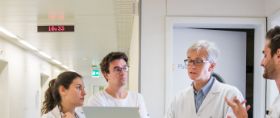
In such an often high-tech environment, the EOC staff always tries to put the patient and his or her family at the center of their professionalism, accompanying and helping those who live through a moment that is often fraught with worry and uncertainty. At the center of action must always remain the patient and family.