




- Coronary artery lesions in bifurcations including unprotected common trunk.
- Chronic total occlusions with anterograde and retrograde approach.
- Multivessel coronary artery disease.
- Aortic steno-insufficiency.
- Mitral stenosis-insufficiency.
- Tricuspid insufficiency.
- Pervious foramen ovale.
- Interatrial defects.
Interventional cardiology
Interventional cardiology deals with the diagnosis and treatment of cardiovascular disease by percutaneous transcatheter treatment. More specifically, it takes charge of both coronary artery disease and-and this is a more recent development in the discipline-valvular and other cardiac pathologies.
What we treat
The interventional cardiology service of the Cardiocentro Ticino EOC Institute ensures scheduled and emergency interventions (primary angioplasty for myocardial revascularization in a heart attack patient) 24 hours a day, 365 days a year. Thanks to this commitment, the Cardiocentro Ticino Institute stands out as one of the few facilities in Switzerland to treat and monitor the patient with heart disease at any time and in the face of any emergency.
Diagnosis and treatment
The full diagnostic and therapeutic range of interventional cardiology treatments is provided:
- Coronarography.
- Elective and emergency coronary angioplasty with possible placement of medicated stents and/or drug-eluting balloons, with the aid of intracoronary imaging, functional assessment and possible ventricular support.
- Recanalization of chronic coronary occlusions (CTOs).
- Transcatheter implantation of aortic valve (TAVI).
- Transcatheter mitral valve repair (MitraClip).
- Closure of intracardiac defects (PFO, DIA, ARTERIOUS DEPTH).
- Percutaneous closure of the left auricle.
- Myocardial biopsies.
- Carotid stenting, PTA/Stenting renal arteries and iliac/femoral axis.
Patient services
Support services
Clinical Services
Insights
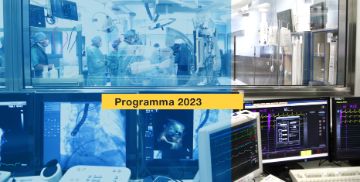
Interventional Cardiology Laboratory Equipment.
With four state-of-the-art angiographs, the cardiac catheterization laboratories at the Cardiocentro Ticino EOC Institute are among the best equipped hemodynamics facilities in Switzerland.
- 3 hemodynamics rooms with "Flat Panel" X-ray tube.
- 1 hybrid room.
- Intracoronary ultrasound device inserted in each hemodynamics room (IVUS, Intravascular Ultrasound).
- Aortic counterpulsator.
- IMPELLA endoluminal assist device.
- FFR (fractional flow reserve) and FR (instant wave-free ratio).
- ECMO (ExtraCorporeal Membrane Oxygenation).
Transcatheter mitral valve correction (MitraClip)
The mitral valve regulates the passage of blood between the left atrium and the left ventricle, preventing reflux during the contraction phase of the heart. If the two valve leaflets--for various reasons: functional, degenerative or infectious--do not close properly, blood regurgitates to varying degrees, worsening hemodynamics. In addition to drug therapy, this condition is usually treated by surgery, an option that is not always feasible, especially in high-risk patients.
The new MitraClip technique, a transcatheter and percutaneous (no chest opening) procedure, allows mitral regurgitation to be reduced by placement of a clip that decreases the valve opening. The procedure is performed under general anesthesia through the right femoral vein; the patient is discharged after 1 to 2 days.
Percutaneous artificial aortic valve implantation
Aortic valve stenosis is a degeneration of the valve located between the left ventricle and the aorta, a narrowing (stenosis) of the valve resulting in reduced blood flow. In patients at high risk for cardiac surgery, a percutaneous approach can now be considered, which involves the introduction of a prosthetic valve by the vascular route (through the femoral artery). Once in place, the valve is implanted (expanded) by excluding and replacing the malfunctioning valve.

Locations
Interventional cardiology is an integral part of what Cardiocentro Ticino Institute offers. All interventional cardiology procedures take place at the Cardiocentro Ticino Institute's cardiac catheterization rooms.
Related News



The English version of this page was created with the aid of automatic translation tools and may contain errors and omissions.
The original version is the page in Italian.
